Yacht Charter Bodrum: 2026 Prices, Season and Routes

A yacht charter in Bodrum costs anywhere from about $281 a day for a small boat to $18,000 a day for a large motor yacht. The average day rate across all boat types in Bodrum sits around $1,241. A weekly gulet charter for 8 people can start near $2,500, while the usual range for 10–16 guests is $8,000–$15,000 a week.
That spread is not a mistake. Bodrum boat rental covers four different products under one phrase: hourly harbour trips, week-long gulet cruises, crewed motor yachts billed with an APA, and superyachts. Once you know which one you want, the pricing gets simple.
Below: price tiers, what each one includes, the 20% VAT almost nobody quotes upfront, water temperature by month, and real distances for the routes people actually sail.
Bodrum yacht rental prices depend almost entirely on boat type and whether a crew comes with it. Prices peak in June, when demand is highest, and bottom out in December.
| Type of charter | Typical price | Who it suits |
|---|---|---|
| Hourly day boat | From about €150/hour; €300–450/hour for groups up to 12 | A half-day around the bays, no overnight |
| Day charter, mixed fleet | $281–$8,354 a day, average around $1,241 | One-day trips, Kara Ada, swimming stops |
| Weekly gulet, crewed | From about $2,500/week for 8; $8,000–$15,000 for 10–16 guests | The classic Blue Cruise, families and friend groups |
| Luxury motor yacht | $1,200–$18,000 a day, plus APA | Short hops, speed, hotel-level service |
| Superyacht, 35–47 m | From about €38,000 to €98,000+ a week | Large budgets, top-end boats |
Per person, a mid-range gulet week often lands close to a decent hotel once you split it across a full group. A boat sailing half empty is where the maths stops working.
Tip: ask for the same boat in the first week of June and the last week of September. The sea is still warm in late September and the rate difference on identical boats is often the largest single saving you can make.
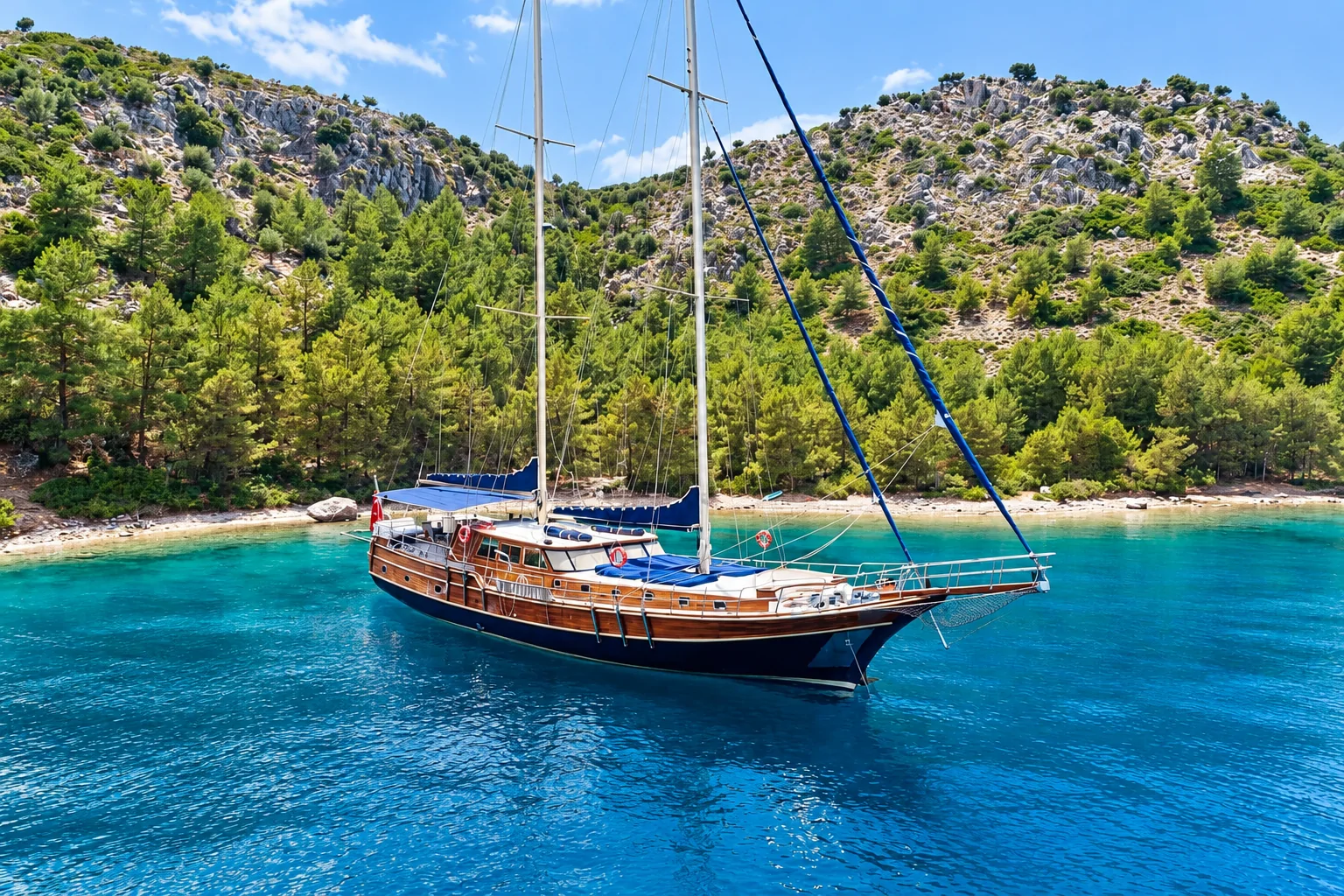
A standard crewed gulet charter includes the boat, the crew, mooring and port fees inside Turkish waters, bedding, boat insurance and roughly 3–4 hours of cruising fuel a day. Food, drinks and anything outside Turkey are extra.
Not included on most gulets:
Motor yachts work differently. Fuel, provisioning and marina costs are always billed separately through an APA (Advance Provisioning Allowance), usually 25–40% of the charter fee. You pay it upfront, the captain spends it on fuel, food, drink, mooring, port taxes, transfers and route extras, and accounts for it at the end. Unspent money comes back.
Then there’s tax: 20% VAT applies to charters that start in Turkey, and quoted prices usually exclude it until you ask for a proper invoice. On a €10,000 week that’s €2,000 you didn’t see on the listing.
Weekly charters normally run Saturday to Saturday, matching marina turnaround in Bodrum, Göcek and Marmaris. Plan flights around that.
The Bodrum sailing season runs from late April to October. The sweet spots are May–June and September–October: warm water, fewer boats in the anchorages, lower rates.
| Months | Sea temperature | What it’s like |
|---|---|---|
| December–March | About 16–17°C | Low season, lowest prices, most charter fleets idle |
| April–May | 17–19°C | Shoulder season, quiet bays, cool swimming |
| June | 22–23°C | Peak demand and peak prices; excellent sailing |
| July–August | 24–26°C, peaking around 25.8°C in August | Strongest meltemi, busiest marinas, highest cost |
| September | 24–25°C | Warmest water with thinning crowds |
| October–November | About 23°C falling to 20°C | Shoulder season; October is Bodrum Cup month |
Average sea temperature in Bodrum peaks around 25.8°C in August and drops to its lowest, about 16°C, in February.
July and August also bring the strongest meltemi, the northerly summer wind. Great for sailing and watersports, less great if half your group is new to boats and wants flat water at lunch.
Two routes dominate yacht charter Bodrum itineraries. West to the Dodecanese islands, or east into Gökova Bay. Both work in a week.
Greek islands. Kos sits about 8 nautical miles from Bodrum, Kalymnos 20, Leros 28, Symi 32 — between one and five hours of sailing depending on the leg and the wind. A classic loop runs Bodrum – Kos – Psérimos – Kalymnos – Leros – Lipsi – Symi – Bodrum. Budget for Greek port fees and clearance; they are never in the charter price.
Gökova Bay. A deeply indented coastline with sheltered anchorages and the well-known Blue Cruise stops: Çökertme, the Seven Islands, Longoz, English Harbour, Sedir Island and Karacasöğüt. The bay’s north shore shelters you from the meltemi, which is why it suits mixed-experience crews.
Distances to plan around:
If you want to understand the boat itself before booking, read what a gulet actually is — it handles nothing like a modern charter yacht.

Fly into Milas-Bodrum (BJV). Transfers to the main marinas take about 30–45 minutes, so you can be aboard within an hour of landing. The airport has daily domestic flights from Istanbul, Ankara and Izmir, plus seasonal European routes in summer.
Tip: if the Greek islands are the whole point of your trip, start from Turgutreis. You save a couple of hours of motoring on day one and the same again on the way back.
No license is needed if you charter with a skipper — the crew is responsible for the boat and you are a guest. A license is required for bareboat.
For bareboat, Turkish port authorities want a recognised practical qualification, typically an International Certificate of Competence or equivalent, usually together with a VHF radio operator licence and a sailing CV. Requirements have tightened: some certificates that used to pass are no longer accepted at many port authorities, so confirm which document your paperwork will be checked against before you pay a deposit.
This trip is not for everyone. If you want to decide on Thursday and sail on Friday with no certificate and no plan, Bodrum in high season will frustrate you. Our guide to bareboat rental and who it really suits goes deeper, and if you’d rather build the qualification properly, there’s our captain’s school.
Because inclusions, VAT treatment, APA rules and licence requirements differ from boat to boat, most people get a better result by having someone match the boat to the trip rather than filtering a listing site on price.
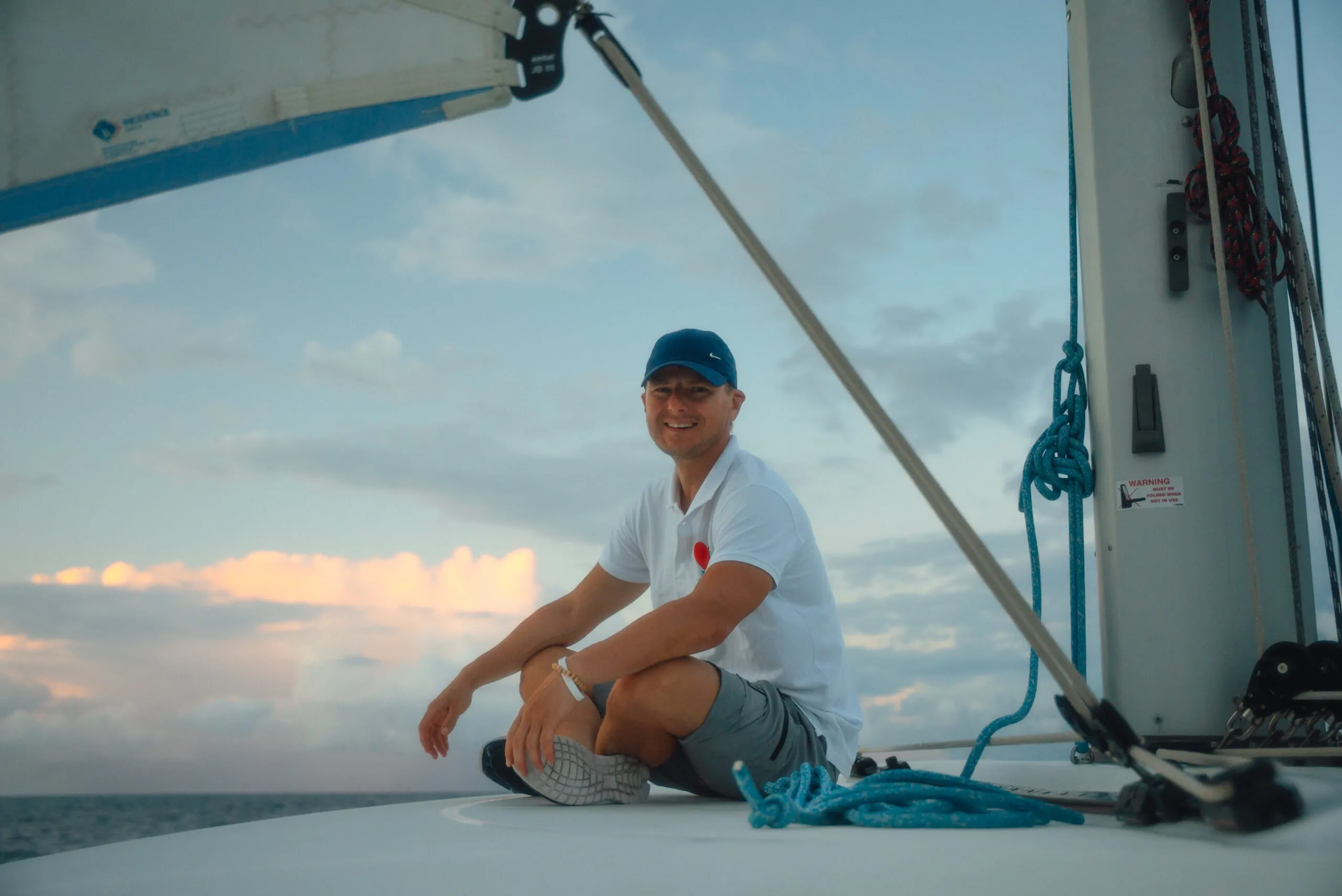
Yachting Retreat works as a charter agent as well as running 7-day small-group sailing trips: we help you find the right yacht to rent in places like Bodrum, bareboat or with a skipper, and can find a qualified skipper for you. Founder and lead skipper Sergey Tarasov — a certified offshore skipper and ISSA instructor with 100+ voyages — looks at each request personally and says which option fits.
If you’re joining a boat rather than running one, it’s worth reading the rules on board first: sleeping arrangements, cooking, seasickness and what the skipper expects of you.
See the yachting retreat format if you’d rather join a ready group than organise a charter yourself, or send a request with your dates and we’ll come back with options.
Yes, anchoring is free everywhere in Turkish waters. Marina berths are a separate matter — mooring fees at some private Turkish marinas are now comparable to Western Europe, so a week spent mostly at anchor costs noticeably less than a week of marina nights.
For June to August, book several months ahead — these are the busiest and most expensive weeks in Bodrum, and the best gulets and catamarans go first. Shoulder months such as May, September and October stay available much longer and cost less.
A gulet is a traditional wooden Turkish sailing boat with a broad deck and usually comes as an all-in crewed package including mooring fees in Turkish waters and 3–4 hours of daily cruising fuel. A motor yacht is faster and more hotel-like but is billed on an APA basis, with fuel, food and marina costs charged separately on top of the charter fee.
Yes, as long as you charter with a skipper — no certificate or experience is required from guests. Bareboat charter is the exception: Turkish port authorities require a recognised practical sailing qualification and usually a VHF operator licence.