How to Get Into Sailing: 4 Ways to Start and What They Cost
The short answer to how to get into sailing: book a trial session at a sailing club, or spend a week on a boat with a licensed skipper. You don’t need to own anything, and you don’t need to learn to sail from a textbook before you ever touch a tiller.
Most people who search this question don’t actually want competitive sailing. They want to travel under sail, handle a boat, and feel what a week on the water does to them. Those are two different hobbies with two very different price tags.
Below: the four ways to get on the water without a boat, what each costs, and what a skipper certificate is actually for.
Competitive sailing is racing — fixed classes, start lines, Olympic disciplines, medals. Yachting is travel and seamanship: you learn to handle a boat for yourself, not for a result sheet.
The confusion matters because the budgets differ by an order of magnitude. Racing means your own boat, sails replaced each season, a trailer, storage. Yachting means someone else’s boat, a week at a time.
Age is not a barrier on either path. People start in their forties and fifties regularly, and nothing about the sport favours men over women — boat handling is technique, not muscle.
The real first step isn’t buying a boat or studying theory in isolation from the water. It’s finding a club, school or trip where you get hands-on basics with someone experienced next to you.
There are four realistic entry points: a local sailing club, free or cheap online theory, dinghy hire or crewing for an experienced skipper, and a week-long sailing trip. They run from slow and cheap to fast and full-immersion.
Tip: do the trial session before you pay for any theory course. Plenty of people discover in two hours on a dinghy that they love it — or that they’d rather be on a bike.
On safety: dinghy sailing is one of the cheapest routes in, and the RNLI’s advice for beginner sailors is worth reading before your first outing — buoyancy aid, checked weather, someone who knows where you are.

Search results blend three completely separate budgets into one number: a child’s sailing section, an adult’s first season, and owning a racing boat. Separating them makes the numbers make sense.
| Path | Typical cost | What it covers |
|---|---|---|
| Child in a sailing section (Russia) | ₽5,000–15,000 a month; ₽8,000–20,000 start-up; ₽60,000–170,000 first year | Equipment hire, buoyancy aid, foul-weather kit, trips to the water. No boat purchase needed. A significant share of Russian children’s sailing schools are free, but extra gear such as sails or boards runs into tens of thousands of roubles per item. Accident insurance is legally required. |
| Adult beginner, no boat (Russia) | From ₽145,000 for a first season | Skipper course from ₽30,000, boat hire around ₽6,000 an hour, group training around ₽2,500 per person, foul-weather outer kit from ₽25,000 a set. |
| Beginner course / certification (US market) | $300–1,000 for a beginner course; $500–3,000 for certification | Courses in popular coastal sailing cities sit at the top of the range; smaller towns at the bottom. |
| Your own racing boat | Over ₽1 million to get started | A three-to-five-year-old racing boat plus import duty, sails at about €2,500 a season, plus lines, transport, storage and entry fees. |
A child’s first year can run ₽60,000–170,000; an adult’s first season is usually ₽145,000 and up. Both figures are right at once. The gap comes from what’s included: group versus private sessions, hired versus bought kit, and whether a skipper certificate is in the budget.
One concrete example from the children’s market: five sessions in an Optimist dinghy, boat hire included, came to ₽22,500 — ₽4,500 per session.
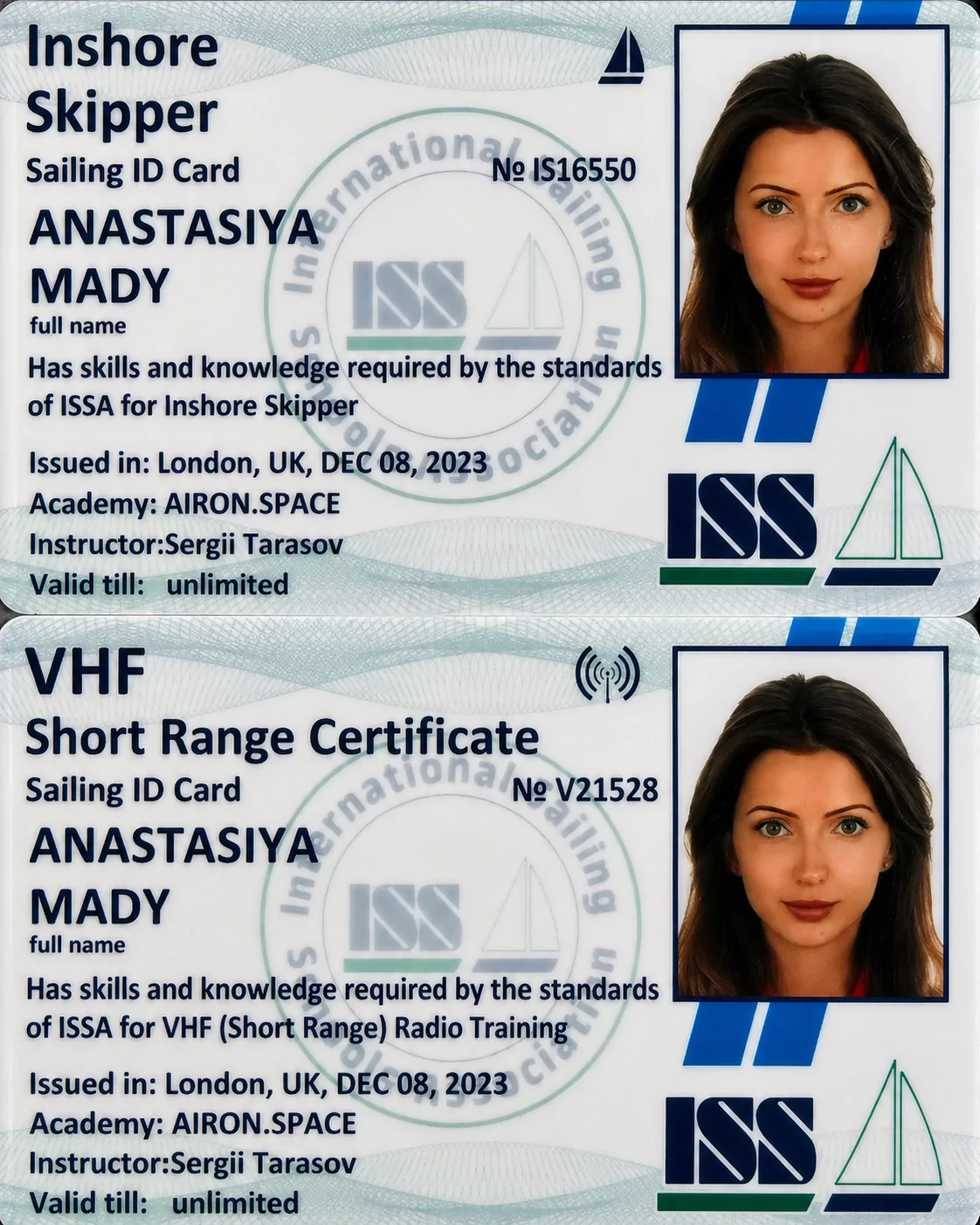
A skipper certificate is what lets you charter a yacht without a professional on board. It comes in two stages — theory, then practice on the water — and the paperwork varies by school.
A base package of an ISSA licence, a VHF operator certificate and a national boating licence will let you charter in effectively any country. If you want to see what that unlocks in practice, read how bareboat chartering actually works before you pay for the course.

Seven days aboard tells you more than any course brochure. You find out how you sleep in a cabin, how you handle a long passage, and whether you actually want the helm — without buying a boat or committing to a season of classes.
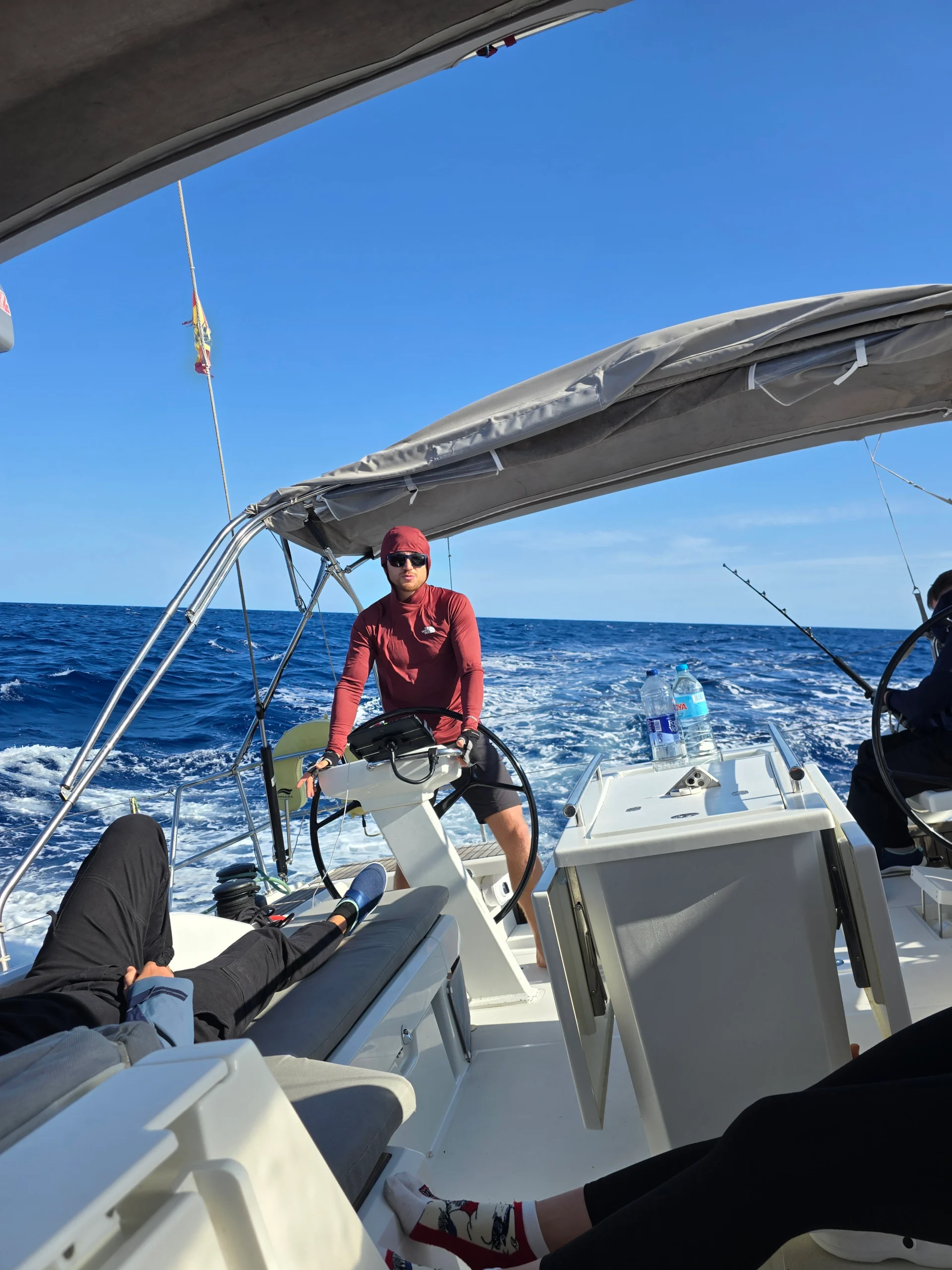
Yachting Retreat runs 7-day small-group sailing trips led by certified offshore skipper Sergey Tarasov, with no sailing experience required. Groups are typically six to eight people per boat with a licensed skipper, and you can learn basic boat handling if you want to — or simply sail as a guest.
Non-swimmers join regularly. The route mostly stays close to shore and in sheltered water, and everyone follows the skipper’s safety rules; the rules on board cover seasickness, swimming and food in detail.
If the week sticks and you want to charter on your own later, the next step is the certificate route described above.
Competitive sailing on a tight budget doesn’t work. A decent used racing boat plus import costs passes ₽1 million, sails run about €2,500 a season, and then come lines, travel, storage and entry fees. Regattas are paid events, and to sail independently you need a skipper certificate first — a course from ₽30,000.
The free entry points are real but limited. Crewing, free online theory and community centres will get you started; without eventually paying for a course or boat time, progress usually stalls somewhere after the trial session.
A certificate with no water time is close to useless. Charter bases read logbooks, and more importantly, you’ll feel it the first time you have to berth stern-to in a crosswind.
A children’s section is usually the cheapest path of all thanks to free schools — but it costs regular time, weekly travel and training camps.
If you’d rather test the hobby in a week than over a season, look at the upcoming trips and dates, or go straight to the captain’s school if you already know you want to sail your own charter. Send a request and we’ll tell you honestly which of the two fits you.
Yes — almost everyone starts on someone else’s boat. Sailing clubs, hourly dinghy hire (roughly $20–100 per hour), crewing for an experienced skipper and week-long sailing trips all give you time on the water with no ownership costs.
No. Non-swimmers join small-group sailing trips regularly, because the route mostly stays close to shore and in sheltered water, everyone wears a buoyancy aid and the skipper’s safety rules apply to the whole crew.
Around seven years old, which is the lower age limit for the Optimist — the standard beginner dinghy class, used by sailors aged roughly 7 to 15. In Russia a significant share of children’s sailing schools are free, though gear and training camps are paid separately.
Usually a few weeks to a few months. Theory courses typically run around 10 days online or about three weeks in a classroom, and practical training is commonly a 7- to 10-day block on the water, after which the certificate is issued.