Learn to Sail From Scratch: Licenses, Time and Cost

You can learn to sail from scratch and hold an internationally accepted skipper certificate in about two weeks. The usual route is online theory first, then 7–14 days of hands-on practice on a yacht, two exams at the end, and a separate fee to issue the plastic card.
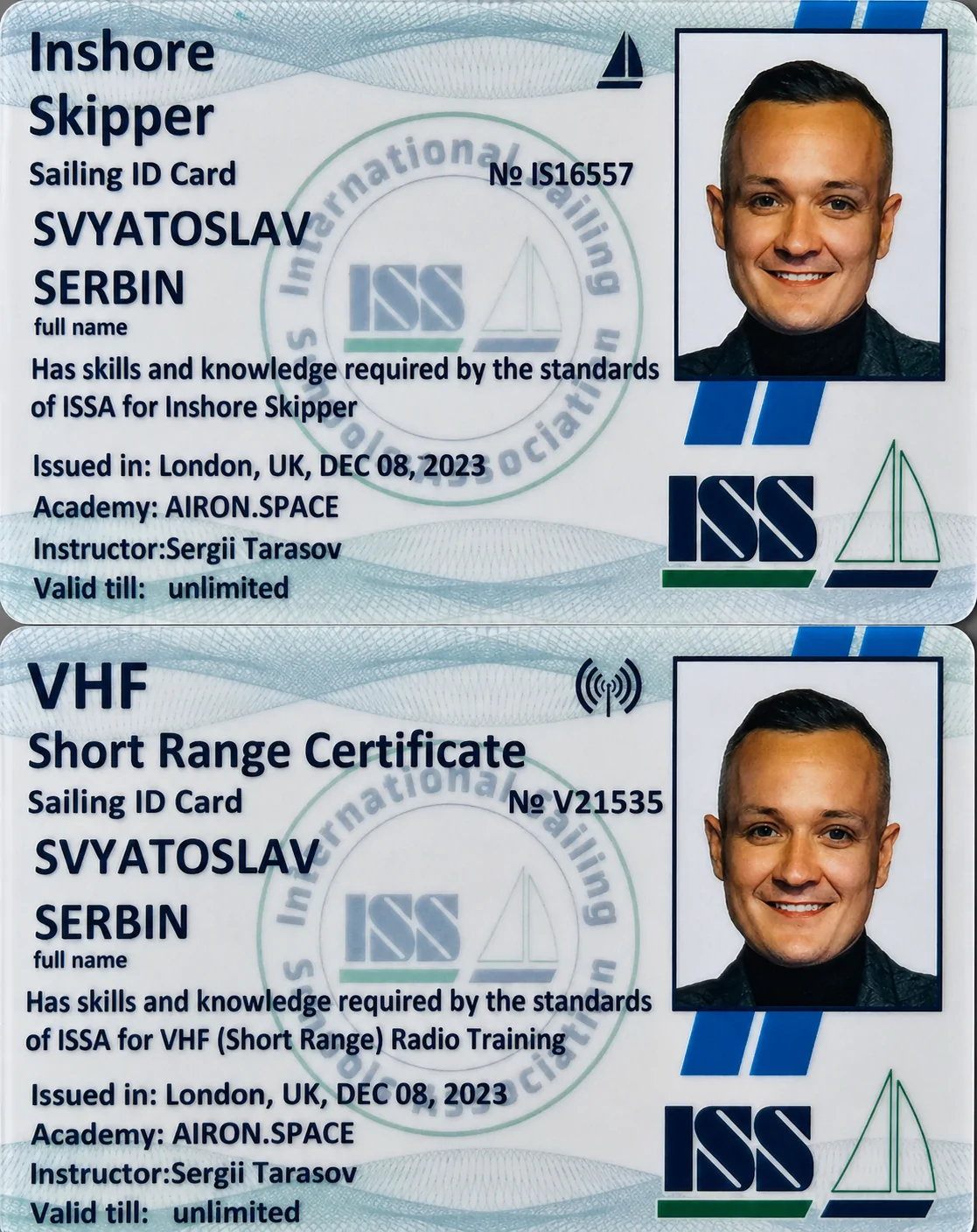
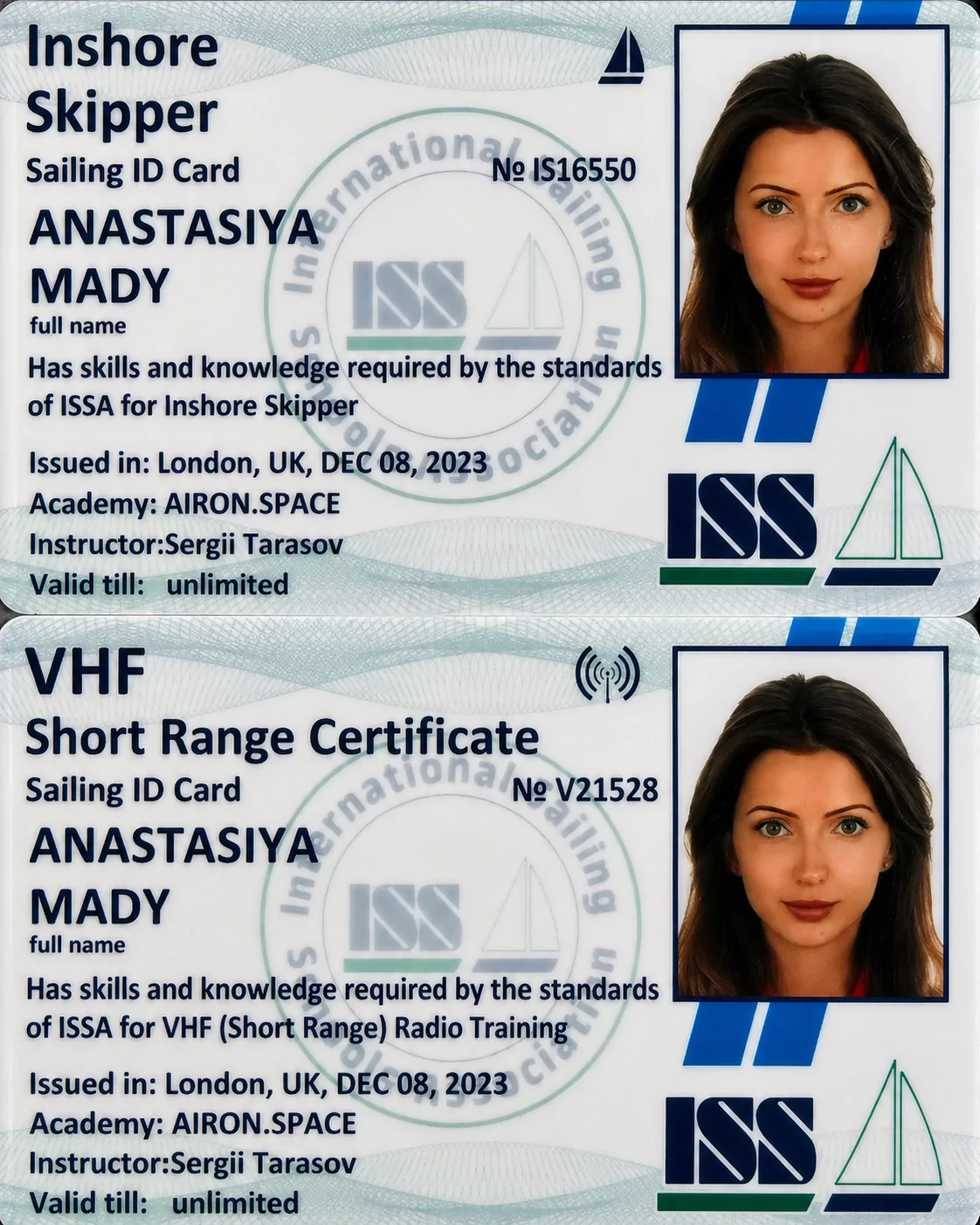
No prior experience is required for the entry-level skipper course in the ISSA, IYT or RYA systems. The entry category is called something different in each one — Inshore Skipper, Bareboat Skipper, Day Skipper — but all three let you take a yacht up to roughly 20 miles from shore in good weather.
This article maps the whole sailing license course landscape so you can pick a track, not a single school’s landing page. If you only want to sail once, enjoy the water and let someone else handle the boat, you don’t need a license track at all — a trip with a skipper is enough.
In practice there is almost no difference for someone who wants to charter a yacht: all three systems sit under the same UN framework behind the International Certificate of Competence, and charter companies in the same countries accept all three. The real differences are in validity, teaching language and night sailing.
| ISSA | IYT | RYA | |
|---|---|---|---|
| Entry skipper level | Inshore Skipper | Bareboat Skipper | Day Skipper |
| Founded / base | 1969, headquarters in Poland | Canada-based certifying centre | UK, mid-20th century |
| Validity | Permanent | 5 years since 2013, renewal with a fee | Permanent |
| Day / night | Day and night | Entry level: daytime only | Day and night |
| Teaching language | Any language | Varies by school | Effectively English only |
| Prerequisite | None for Inshore Skipper | None for Bareboat Skipper | Competent Crew first |
RYA is the strictest about instructor qualifications and course structure, which is why it has the reputation of being the hardest to get into. ISSA sets lower requirements for schools, so the quality of your course depends more on the instructor than on the badge.
Tip: choose the instructor and the sailing area first, the system second. A week of real helming in windy water is worth more than the letters on the card.
No, not in ISSA or IYT. The beginner crew level — Yacht Crew (ISSA), International Crew (IYT) — is optional if your goal is the skipper certificate. Only RYA requires Competent Crew before Day Skipper.
The sequence for a complete beginner looks like this:
If you want to understand what the theory block actually contains before paying for anything, our breakdown of the Day Skipper theory course covers the syllabus in detail.

Count on 7–14 days of in-person practice for an entry-level skipper license, assuming the theory is done beforehand. The spread depends entirely on whether you have ever handled a boat.
Higher levels are a different commitment. Offshore and Yachtmaster-type courses require roughly 28 days at sea or 800 logged nautical miles across at least two cruises and two locations.

Budget roughly €850–2,000 for an entry-level skipper course in 2026, plus around €200 for the license itself. The number swings mostly with the length of the course and the country.
Always ask what the price contains. Theory, bunk on board, food kitty, port fees, exam and license issue can be bundled or billed one by one, and that is where a €990 course quietly becomes €1,400.
You can start sailing courses as a child and hold a skipper certificate at 16. You will also need a VHF radio operator certificate — most charter companies ask for it alongside the skipper card.
No. Russian GIMS licenses are not valid abroad, and an RYA or IYT certificate does not automatically authorise you to sail independently on Russian inland waters. They are parallel systems, not a ladder.
GIMS mainly certifies motor vessels. A sailing category can be added, but the sailing itself has to be learned elsewhere. If you already hold a GIMS motor license and an IYT sailing certificate, you can usually re-certify through GIMS and open the sailing category without sitting new exams.
One more thing beginners assume wrongly: an ISSA, IYT or RYA certificate is not a blanket permit everywhere. Individual countries and charter companies add their own requirements on top — logged miles, a co-skipper, a local permit. Our guide to bareboat rental explains what charter companies actually check.
Yachting Retreat runs a Captain’s School where complete beginners learn to sail from scratch during a 7-day live-aboard trip on a catamaran or yacht, led by founder and lead skipper Sergey Tarasov. Teaching follows the same structure described above: theory, hands-on days at sea, and progression toward skipper level, under an ISSA-qualified instructor.
No experience is needed to start. Sergey is a certified offshore skipper and ISSA yachting instructor with more than nine years of yachting and over 100 voyages, and he teaches sailing from scratch himself rather than handing it off to junior staff. You can read more about him on the founder’s page.
Groups are small — usually six to eight people on board — so everyone gets real time on the helm rather than a turn once a day. Non-swimmers join regularly; the route stays close to shore and in sheltered water, and everyone follows the skipper’s safety rules on board.

Participants are interviewed before booking so the group shares similar goals, and anyone who leaves a request gets a free mini-course and a €50 bonus toward a trip. If you want to see where the next training weeks are sailing, check the upcoming trips page or read more about the Captain’s School. Send a request and Sergey will tell you honestly which format fits your level.
Yes. ISSA Inshore Skipper and IYT Bareboat Skipper courses accept complete beginners, though schools usually recommend an 11–14 day format rather than the 7-day intensive, which is aimed at people with prior sailing experience. Only RYA requires the Competent Crew course before Day Skipper.
Online and self-study theory is standard practice. Schools typically send a digital and printed textbook on booking and give you chat access to an instructor, so you arrive for the practical week already knowing charts, rules and weather basics.
Any of the three — ISSA, IYT or RYA — works, because Mediterranean charter companies accept all of them under the same ICC framework. ISSA certificates are permanent and can be taught in any language, while IYT entry-level certificates expire after five years and restrict you to daytime sailing.
ISSA and RYA certificates are permanent and need no renewal. IYT switched to five-year validity in 2013, so an IYT certificate must be renewed with a fee every five years.