Sailing Retreat in Greece: Islands, Routes and What to Expect
Greece has always been a place where people come to slow down. Ancient temples, whitewashed villages, water so clear you can see the bottom from the deck. But there’s a version of Greece that most tourists never see — the one you only reach by sailing.
A sailing retreat in Greece is not a cruise. It’s not a flotilla holiday. It’s a small group of people — usually 8 to 12 — living on a catamaran for 7 days, moving from island to island, waking up in a new bay every morning, and doing it all with intention: breathwork at sunrise, shared dinners, real conversations, and no agenda except the wind.
Here’s everything you need to know before you go.
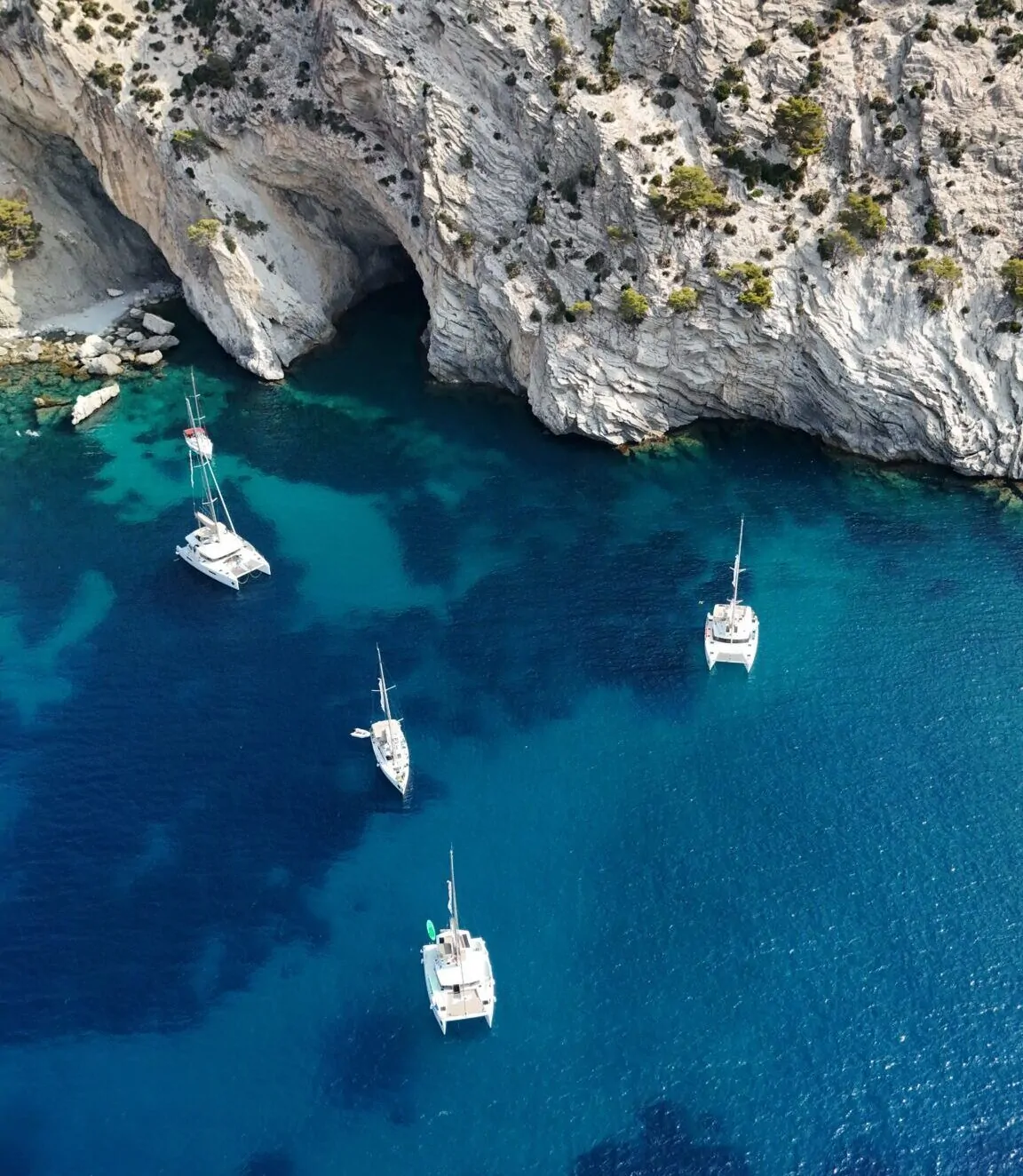
Of all the destinations for a retreat in Greece, the sea is the one that surprises people most. The Greek archipelago has over 6,000 islands. Only 227 are inhabited. The rest are yours — empty beaches, abandoned chapels on cliffs, bays where the only sound is the anchor chain dropping into turquoise water.
The sailing conditions are exceptional. The Meltemi wind, which blows steadily across the Aegean from June to September, means you’re almost always under sail — not motoring. That matters. There’s something meditative about a boat moving through water with no engine noise, just the sound of the hull and the breeze.
And the infrastructure is excellent: well-equipped marinas, fresh seafood at every port, and routes that can be adjusted in real time depending on wind and the group’s energy.
The Cyclades — the classic choice. Santorini, Mykonos, Paros, Naxos, Ios. Iconic landscapes, dramatic caldera views, and a mix of wild and social energy. Best for those who want beauty and some nightlife alongside the retreat experience. Peak season is July–August — busy but spectacular.
The Ionian Islands — Corfu, Kefalonia, Ithaca, Lefkada, Zakynthos. The Ionian side of Greece is greener, calmer, and less crowded than the Aegean. The water is an impossible shade of blue-green. This is the better choice for people who want nature, quiet anchorages, and fewer tourists. Best season: May–June and September.
The Dodecanese — Rhodes, Kos, Patmos, Symi. A route that mixes Greek island life with a hint of Turkey visible on the horizon. Patmos, where the Book of Revelation was written, has a spiritual gravity that fits a retreat well. Symi is one of the most beautiful harbours in the Mediterranean.
The Saronic Gulf — Hydra, Spetses, Poros, Aegina. The most accessible from Athens — perfect if you’re flying into the capital. Hydra has no cars, no motorcycles, just donkeys and silence. For a short retreat or a first-time sailing experience, this is the gentlest entry point.
No two days are the same, but the rhythm is the same.
Morning. You wake up anchored in a bay. The light is low and golden. Someone is already on the deck. Breathwork or gentle yoga happens naturally — not because it’s scheduled, but because the setting makes you want to slow down. Breakfast together. Coffee. The captain checks the wind.
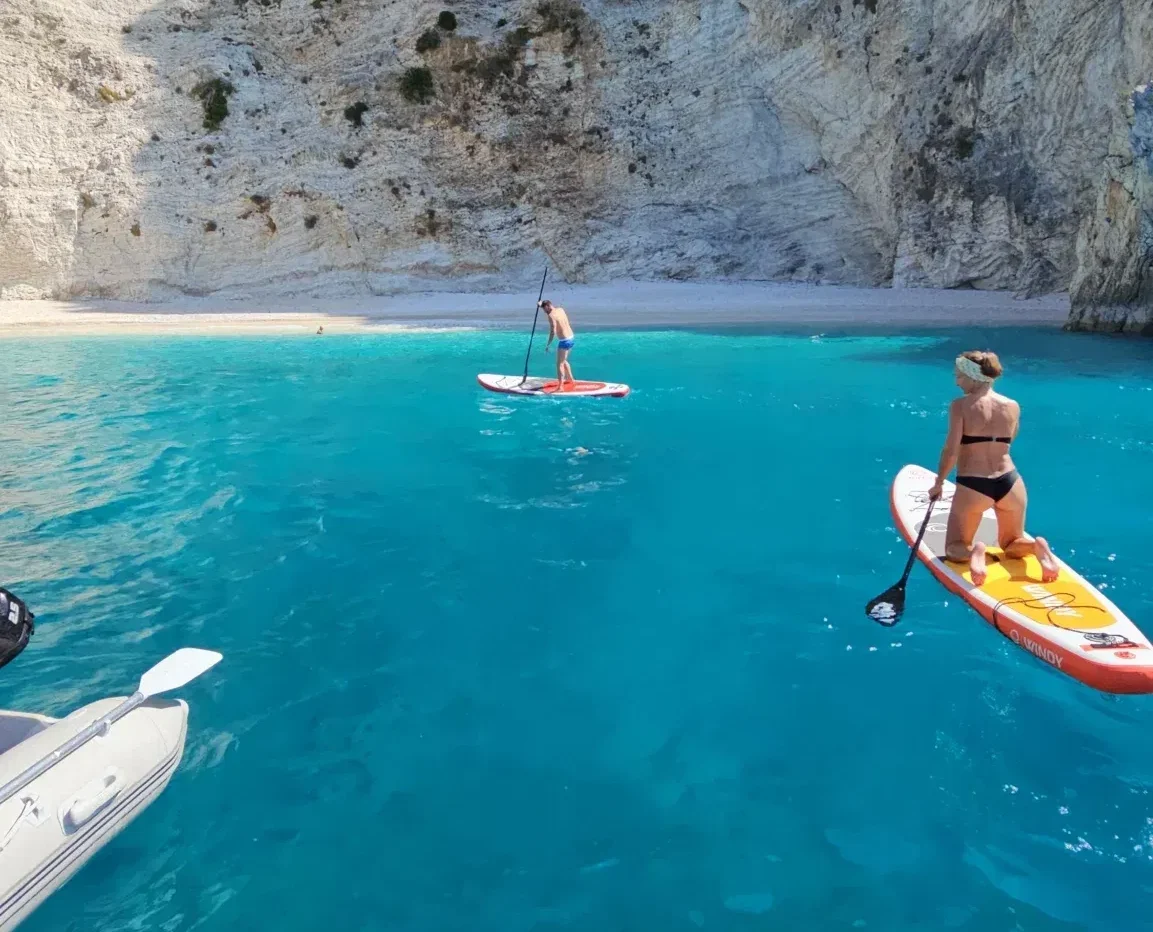
Day. The boat moves. You help with the sails if you want, or you sit on the bow and watch the islands pass. There’s a stop for swimming — Greece has some of the clearest water in the world. Maybe a snorkel over a reef, maybe a walk up to a village. A lunch of fresh fish at a harbour taverna, or something the group cooks on board from what you bought at the morning market.
Evening. The anchor drops in a new place. Sunset from the deck with the group. A sharing circle — a simple practice where everyone speaks honestly about the day, what they felt, what they noticed. Dinner. Stars. The kind of silence you forget exists until you’re in it.

Athens → Saronic Gulf → Athens (7 days) The most accessible route for a retreat in Greece. Departs from the Alimos marina near Athens. Visits Aegina, Poros, Hydra, and Spetses before returning. Good for beginners — seas are calmer, distances are shorter. Hydra is the highlight: no vehicles, medieval architecture, and some of the best swimming in Greece.
Lefkada → Ionian circuit → Lefkada (7 days) Departs from Lefkada marina. Covers Meganisi, Ithaca, Kefalonia, and Zakynthos. The Ionian is greener and more dramatic than the Cyclades — volcanic cliffs, sea caves, and water that shifts between turquoise and deep blue. Less crowded, more nature. Ideal for a retreat focused on inner work and disconnection.
Rhodes → Dodecanese → Kos (7 days) A route for people who want history alongside the sailing experience. Lindos on Rhodes, the monastery of Patmos, the coloured harbour of Symi. The Dodecanese has a different character from the rest of Greece — more Byzantine, more layered. A strong choice for September when the Cyclades are winding down.
A sailing retreat in Greece is not a sailing course, though you’ll learn to handle the boat if you want. It’s not a yoga retreat on a boat, though movement and breathwork are part of every day. It’s something harder to categorise — a container for transformation that uses the sea as its primary tool.
People come for different reasons. Some are burning out and need to stop. Some are at a crossroads and need clarity. Some just want adventure in a format that feels safe and intentional. What they find is usually different from what they expected — not relaxation exactly, but something more useful. A reset. A perspective shift. A group of people who, by day three, feel like they’ve known each other for years.
The small group size matters. 8 to 12 people on a catamaran creates an intimacy that’s impossible in a hotel or a larger tour group. You share meals, anchor swims, sunsets. By the end of the week you know these people — what they’re afraid of, what they want, what made them laugh.

Best time for a sailing retreat in Greece: May, June, and September are the ideal months. The sea is warm, the anchorages are not overcrowded, and the Meltemi hasn’t hit its August intensity. July and August are the most dramatic — full Meltemi wind, which some people love and others find challenging.
Experience required: None. A licensed captain handles all navigation and safety. Participants are welcome to help with the sails and learn — most do — but it’s optional.
What’s included: Catamaran charter, captain’s services, insurance, bedding and towels, on-board training in sailing and breathwork practices.
What’s not included: Flights to Greece, food and drinks (usually €50–70 per person per day shared between the group), harbour fees, and optional shore excursions.
Group size: 8 to 12 people. Small enough to feel personal. Large enough to create the group dynamic that makes a retreat work.
If you want to see Greece differently — not from a beach chair or a tour bus, but from the water, with a small group of real people — then yes.
If you’re looking for a week that combines physical adventure with inner work, good food, good company, and mornings that feel genuinely different from your usual ones — then yes.
A retreat in Greece has been on many people’s list for years. The sea version of it is the one that stays with you longest.
Check available dates for our next Greece yachting retreat and reserve your spot.