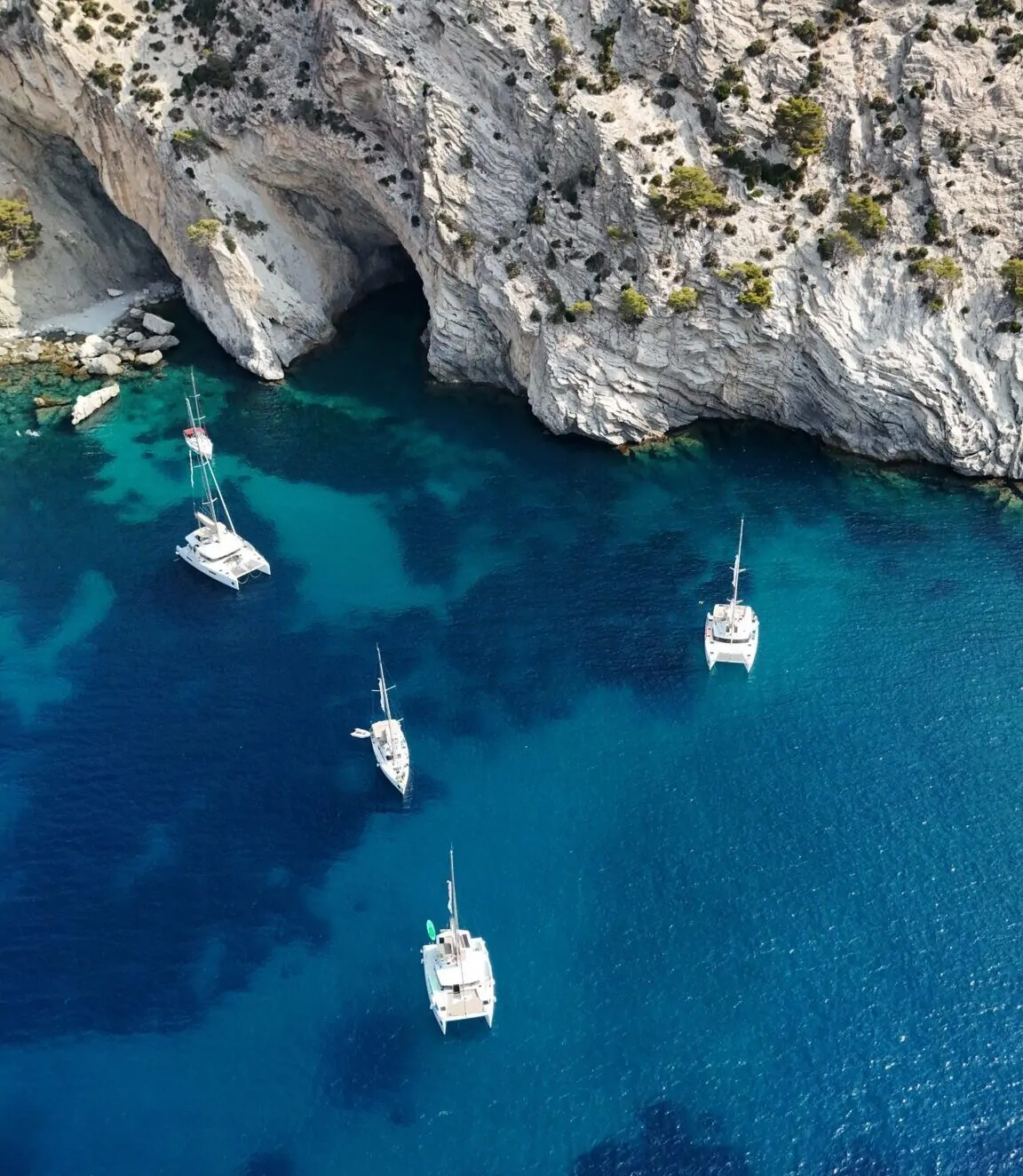
Best Time to Visit Seychelles: A Month-by-Month Wind Guide
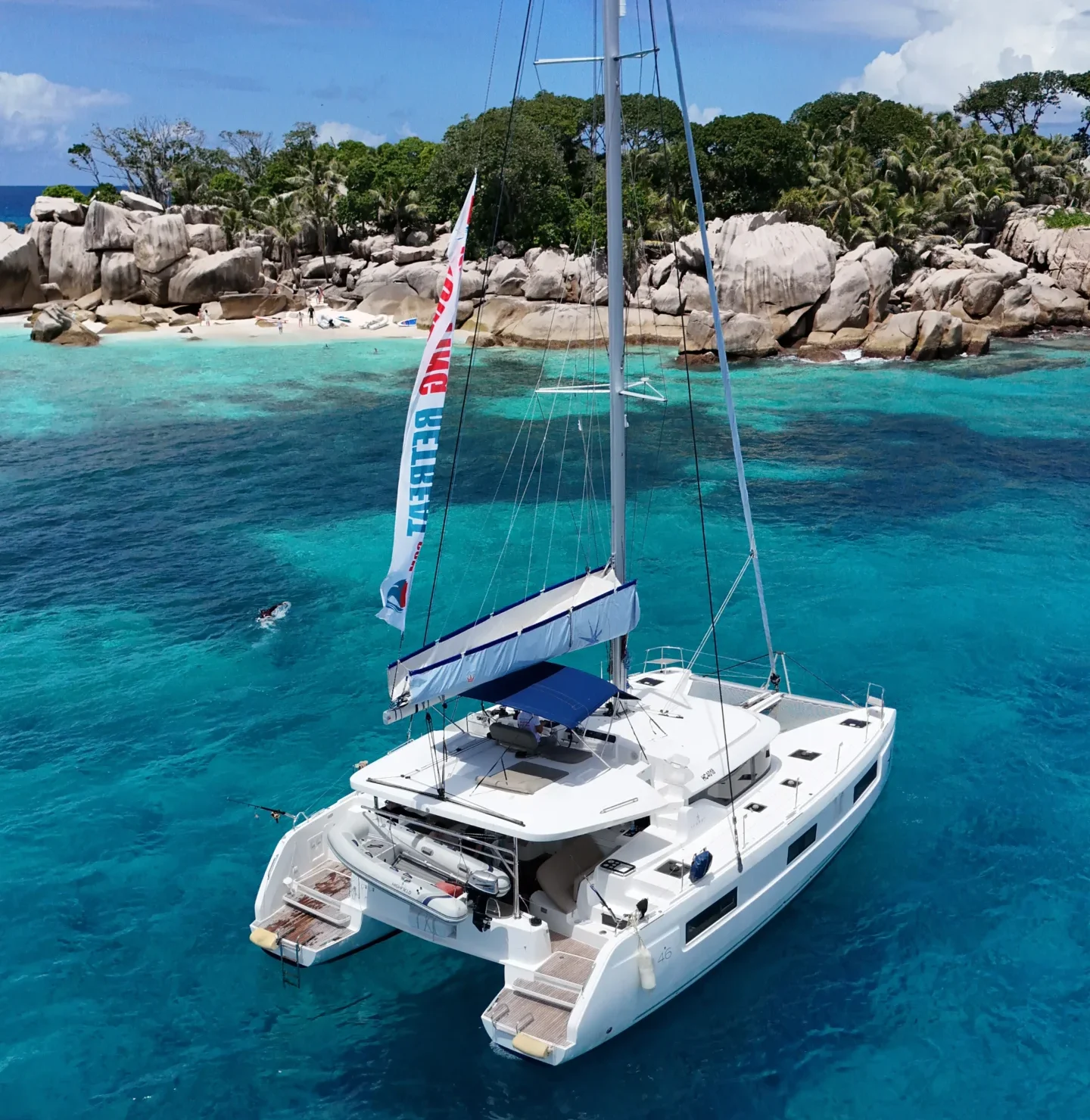
The best time to visit Seychelles for calm, clear water is April–May and October–November, the two transition windows between the trade winds. The sea flattens, wind drops to 5–10 knots, and snorkelling visibility is at its best.
If you want strong, steady sailing wind instead, go in June–August, when the southeast trades blow 15–25 knots. If you want warm water, light wind and easy swimming, the northwest monsoon from late November to March works well — it is just wetter, with December and January the rainiest months.
Below is what actually changes month to month: temperatures, rainfall, wind strength, which coast stays calm, and what January feels like in practice.
Seychelles has three weather periods driven by trade winds, not a simple dry/wet split. The northwest trade wind blows roughly November to March, the southeast trade wind from May to September, and between them sit two calm transition windows.
The islands lie between 4 and 10 degrees south of the equator, about 1,800 km east of Africa, so there is no cold season at all. Daytime air sits in the high twenties every month of the year; what changes is the wind, the humidity and how much rain falls in a given week.
The northwest monsoon brings warmer, more humid air, calm seas and short heavy showers, usually late in the day. The southeast trades bring cooler, drier air, a steady breeze and open-water swell up to about 2 m. April–May and October–November are the in-between months: little wind, manageable humidity, glassy water.

Air temperature in Seychelles stays near 26–31°C all year and the sea runs 23–28°C. Rainfall is the real variable: roughly 380–405 mm in January against 76–90 mm in July.
| Month | Air °C | Water °C | Rain (mm) | Wind |
|---|---|---|---|---|
| January | 27–30 | 27–28 | 381–405 | NW monsoon, 10–15 kn |
| February | 28 | 27 | 250–279 | NW, easing |
| March | 28 | 28 | 200–229 | NW fading |
| April | 28–31 | 27 | 178–185 | Transition, 5–10 kn |
| May | 28 | 26 | 160–178 | SE trades begin |
| June | 27 | 25 | 102–115 | SE, 15–20 kn |
| July | 26 | 23 | 76–90 | SE peak, 15–25 kn |
| August | 26 | 23 | 76–120 | SE peak |
| September | 27 | 23 | 127–165 | SE easing |
| October | 27 | 26 | 152–180 | Transition, 5–10 kn |
| November | 27 | 25 | 190–229 | NW begins |
| December | 27–28 | 27 | 305–356 | NW building |
Weather stations on different islands and different reference years disagree by 20–30% on these numbers, and even the annual total is contested: published figures range from about 1,700 mm to 2,365 mm a year. That spread is normal for tropical islands with mountains in the middle, so treat the rainfall column as a guide, not an exact forecast.
The wind direction tells you which coast will be calm. Pick beaches facing away from the wind of that season and you get flat water; pick the wrong side and you get chop, current and seaweed.
Tip: choose your island base by season, not by photos. The same beach that looks mirror-flat in a February photo can be a wind-blown shore break in August.

For clear water, April and October are the most consistently recommended months, when trade winds ease and the sea turns glassy. Some sources put the best diving window a little wider, at March–May and September–November.
For sailing, the split is clearer:
Currents between the islands average about 1.5 knots, and from June to September they run westward at roughly 1.2 knots — but passages across the flats can accelerate to about 4 knots. That matters when planning a route, which is one reason most first-time sailors go out with a skipper rather than a bareboat charter.
This article mostly points to the calmer months. If you want hard, consistent wind and don’t mind cloudy water, July–August is your season instead.
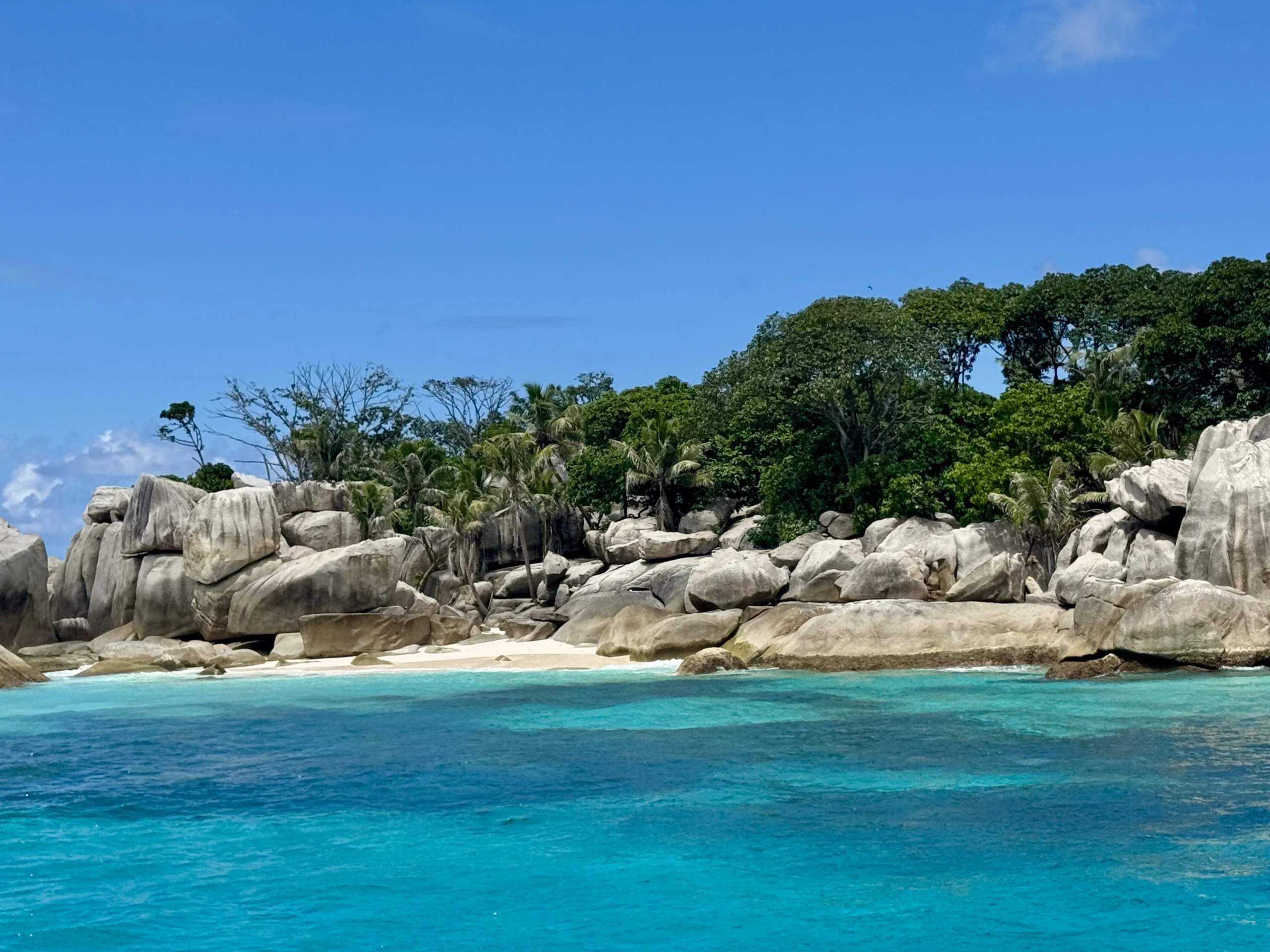
No. Most of Seychelles lies outside the Indian Ocean cyclone belt, which is why the islands are sailed year-round. The US State Department background notes state plainly that most of the islands lie outside the cyclone belt, so high winds are rare.
What you can get between December and February are squalls: short, sharp bursts of wind and rain that pass within an hour. They are not cyclones and they rarely change a day’s plan beyond an afternoon delay.
Only the remotest southern islands, far from Mahé, Praslin and La Digue, sit closer to any genuine cyclone risk. Standard one-week routes don’t go near them.

January in Seychelles is hot, humid and among the rainiest months — and still a good month to be on the water. Showers start suddenly and pass fast, often with bright sun back about 15 minutes after a downpour begins, and the heavier rain tends to fall late afternoon, evening or overnight.
Air runs around 28–30°C on Mahé and about 26°C on Praslin; sea temperature near shore is 26–28°C, closer to a warm bath than a swim. Wind is light northwesterly, which makes January far gentler for first-time sailors than the July–August trade-wind peak.
The trade-off is crowds and availability. December to February is peak season as European travellers escape winter, so boats and skippers are booked months ahead.
Yachting Retreat runs 7-day small-group sailing trips in Seychelles in January 2027, led by certified skipper Sergey Tarasov, with 6–8 people on board a catamaran. No sailing experience is needed — you can learn to handle the boat if you want to, and non-swimmers join regularly, since the route stays close to shore and in sheltered water. The rules on board and FAQ cover food, seasickness and what a day actually looks like.
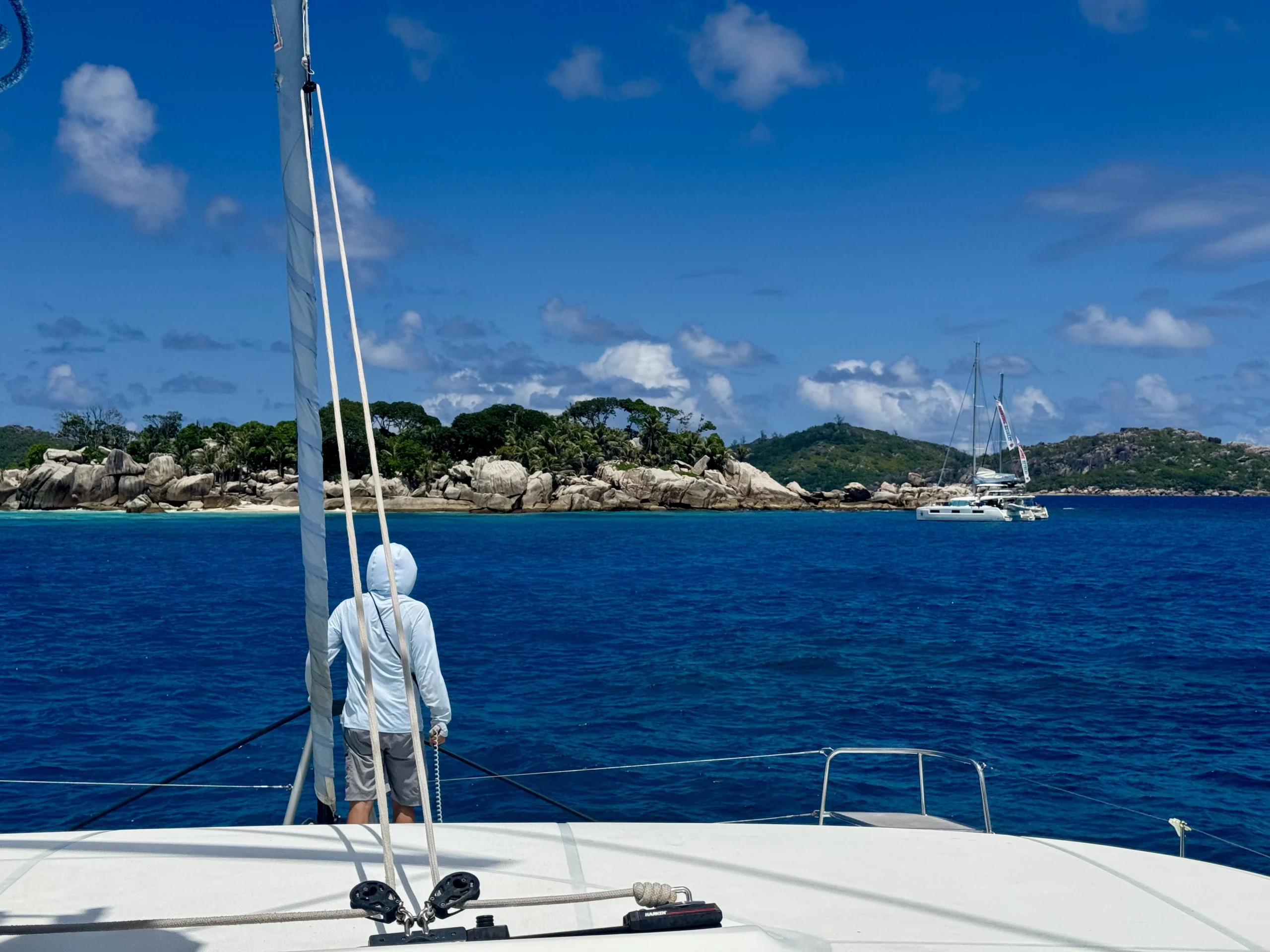
Dates and the route for the Seychelles sailing retreat in January 2027 are on the trip page, and you can compare it with other upcoming trips. Send a request if you’d like the captain to tell you which month suits your plans.
Published annual totals range from about 1,700 mm to 2,365 mm depending on the source and weather station, with most of it falling between November and March. Treat any single figure as approximate: monthly readings from different stations on Mahé differ by 20–30%.
Seychelles does not require a traditional visa for most visitors, but travellers need a digital travel authorisation approved before departure. Check the current rules for your passport before you book, since requirements and fees change.
Yes. Most of Seychelles lies outside the cyclone belt, and the rain of the northwest monsoon comes as short showers that often clear within about 15 minutes, with squalls possible between December and February.
Book several months ahead for December–January and July–August, the two busiest windows, when the small local fleet fills early. Shoulder months like April, May, October and November usually have better availability.