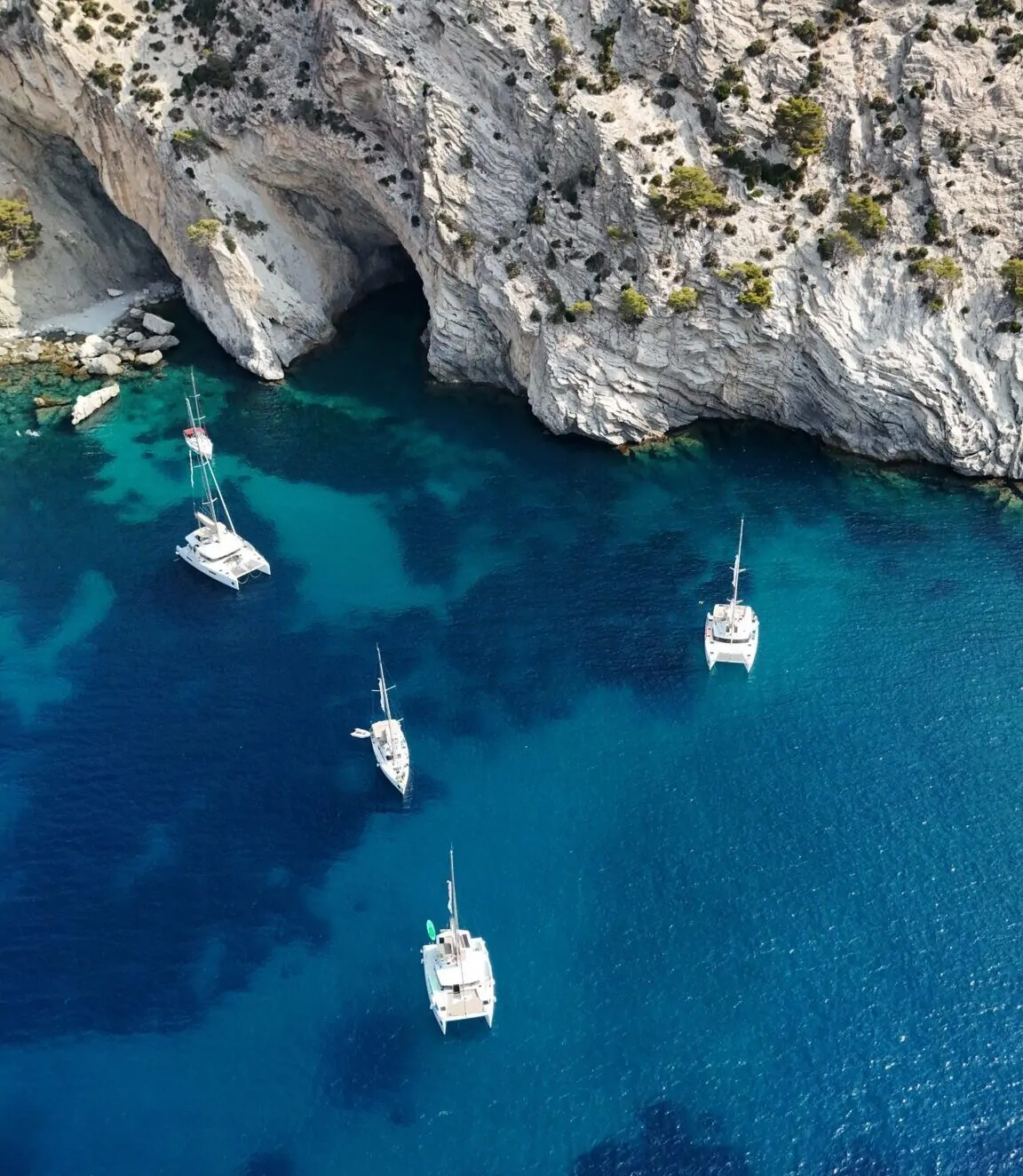
Bareboat Rental: What It Means and Who It Actually Suits
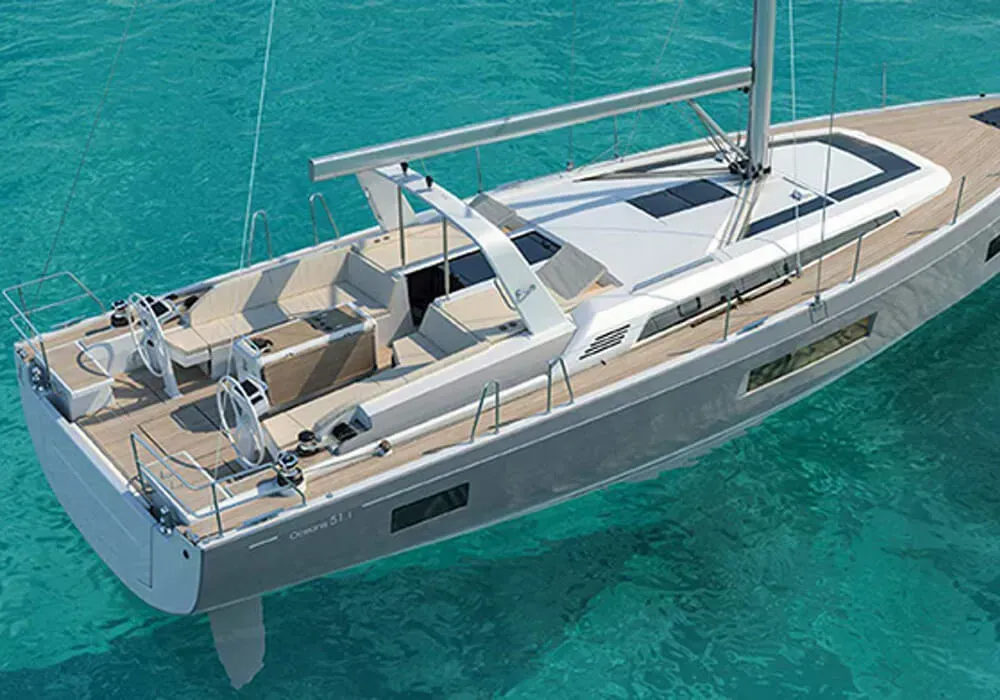
14 October 2026
Bareboat rental means you charter the yacht or catamaran on its own — no skipper, no crew. You take the boat, you plan the route, you dock it, and you are responsible for it and for everyone aboard from the moment you sign the handover papers until the check-out inspection.
It is the cheapest way to get a whole boat for a week, and the only way to sail exactly where you want. The price is responsibility: the 6 a.m. weather call is yours, the crosswind mooring is yours, and the security deposit is in your name.
Below is what a bareboat charter actually includes, what paperwork the charter base will ask for, what you pay on top of the charter fee, and how to tell honestly whether you are ready — or whether a skipper is the better buy this year.
A bareboat charter is the rental of the vessel itself — hull, rig, sails, engine, onboard equipment — without any paid crew. The word “bareboat” refers to the absence of crew, not to an empty boat.
The yacht comes equipped to go to sea: safety gear and life jackets, liferaft, navigation electronics, anchor and ground tackle, galley kit, bedding and towels in most bases, and usually a dinghy with an outboard. What is missing is the person who knows how to use all of it. That person is you.
The week normally runs marina to marina. You collect the boat at a base on Saturday afternoon, sail your own route, pay the running costs as you go, and bring the boat back to the same base at the end of the week for a check-out inspection.
Yachting Retreat works as a charter agent, so we help people find the right yacht to rent — bareboat or with a skipper — rather than chartering only our own boats.

You need a recognised skipper certificate, and in many countries a VHF radio operator certificate as well. Which documents are accepted is decided by the flag state of the boat and the maritime authority of the country you are sailing in, so check the rules for that specific country before you book.
Charter companies also ask for a sailing CV: what boats you have handled, their length, which areas you have sailed, and how recently. A certificate from a course you took three years ago with no sea time since is a weak answer, and good bases notice.
A licence is not experience. What actually decides how your week goes:
If your licence is not accepted locally, the standard fix is a skipper for the week, or for the first two or three days until you have the area and the boat under control. If you want the certificate itself, that is what our captain’s school is for — founder and lead skipper Sergey Tarasov is a certified offshore skipper and ISSA yachting instructor with more than nine years of yachting and 100+ voyages, and he teaches from scratch.
Tip: send your licence and sailing CV to the agent before you pay a deposit, not after. Rejected paperwork at check-in is an expensive way to learn the rules.

Bareboat gives you the whole boat and all the responsibility; a skippered charter is the same boat plus a licensed professional; a cabin charter gives you one berth in a small group. The right choice depends on your licence, your crew and how much you want to decide.
| Option | Licence needed | What you get | Main trade-off |
|---|---|---|---|
| Bareboat | Yes | Whole boat, full freedom of route, lowest cost per boat | You are legally and financially responsible 24/7 |
| Skippered | No | Same boat plus a licensed skipper, local knowledge, safe mooring | You give up a berth (or the skipper takes the crew cabin) and pay a daily fee |
| Crewed | No | Skipper plus hostess or cook; closest thing to a hotel at sea | Highest cost, least privacy on a small boat |
| Cabin charter / group trip | No | One berth on a boat with an existing small group | Fixed route and dates, you share the boat with strangers |
The short version: bareboat buys freedom, a skipper buys sleep.

The charter fee normally covers the boat, its standard equipment, hull and third-party insurance, and the technical handover. Almost everything else you use during the week is extra.
Usually paid separately:
Deposit insurance or a reduced-deposit package is the usual way to cap that risk, and it is worth asking about before you arrive rather than at the desk. Marina fees are the line most crews underestimate, especially in high season in popular bays. Rates vary by region and month, so ask for a written cost breakdown before signing anything.
Tip: agree how the crew splits running costs before the trip, not while someone is standing at a fuel dock with a card in hand.
Check-in is a technical handover where a base engineer walks you through the boat and you sign for it. Check-out is the same process in reverse, with the deposit released if the boat comes back as it left.
Tip: plan to be back at the home marina the evening before check-out, not the morning of. Weather does not care about your flight.
Bareboat chartering is a bad idea for anyone whose only sea time is a one-week course taken a few seasons ago. You will spend the week managing anxiety instead of sailing.
It is also wrong for a crew where one person can handle the boat and everybody else is on holiday. Fatigue is the real risk on a bareboat week, not storms.
Skip it for a first sailing week in an area with strong seasonal winds, big tidal range, rocky unlit approaches or long open passages. And skip it if you do not want decisions — with bareboat, the call to move or stay is yours every morning.
Groups planning to drink daily should not take a bareboat either. Command responsibility and alcohol do not combine. On our trips alcohol is discouraged — a glass of wine in the evening is fine — and nothing harmful comes aboard; you can read the full rules on board before you decide whether that suits you.
If any of this describes you, the better options are a skippered charter, a cabin charter, or a season sailing as crew before you take the boat yourself.
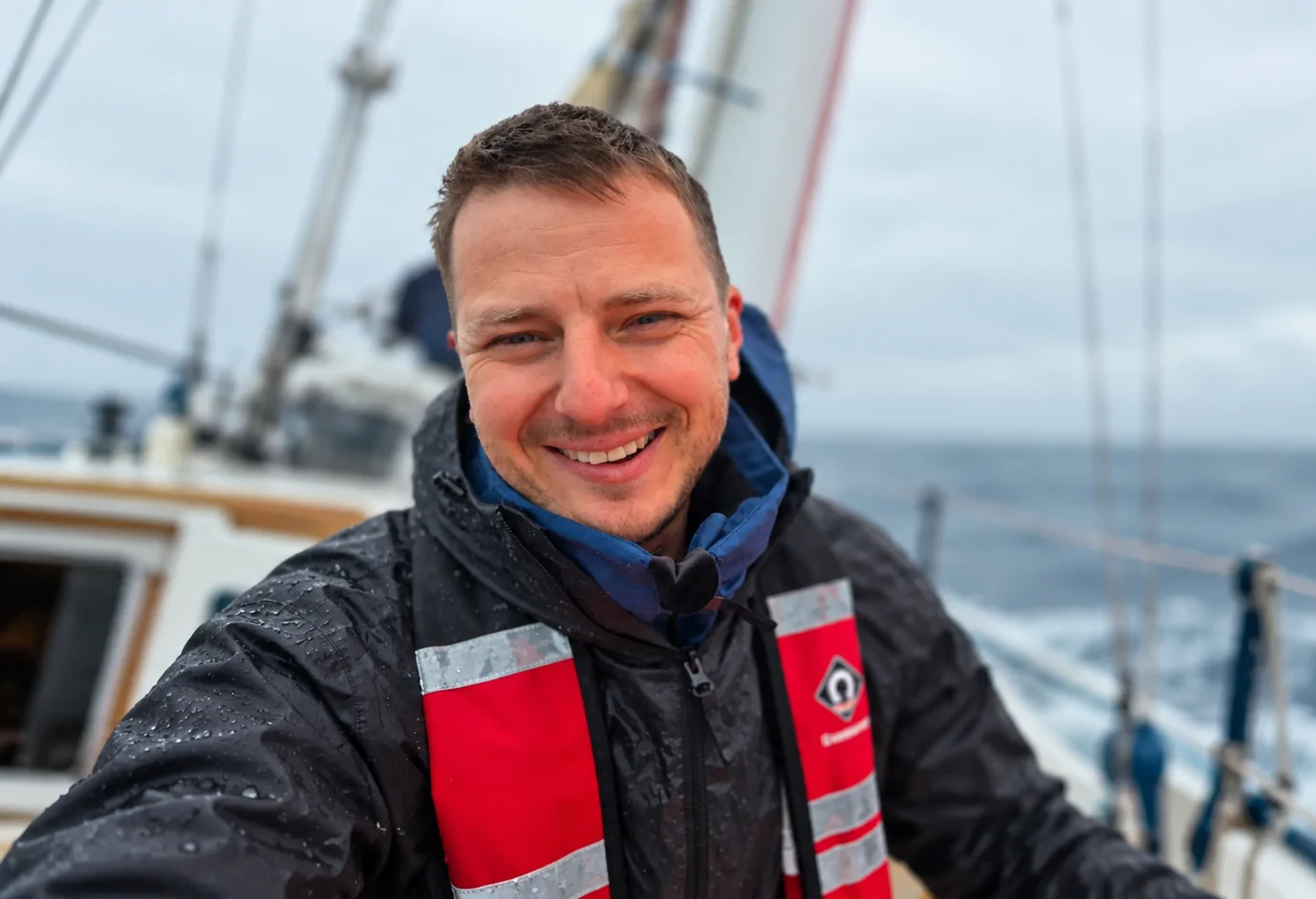
Yachting Retreat works as a charter agent: we help you find the right yacht to rent, bareboat or with a skipper, and we can find a skipper for a boat you have already chosen. We also run 7-day small-group sailing trips led by skipper Sergey Tarasov, with 6 to 8 participants per boat and no sailing experience required.
What that looks like in practice:
Anyone who leaves a request gets a free mini-course and a €50 bonus towards a trip.
Have a look at the upcoming trips and dates if you want to join a boat, or send a request with your crew size, area and dates and we will come back with concrete options.
No. Bareboat charter requires a recognised skipper certificate, and many countries also require a VHF radio operator certificate. Without one, your options are a skippered charter, a crewed charter, or booking a berth on a group trip.
The security deposit is an amount blocked on your card at check-in to cover damage or loss, and released after the check-out inspection if the boat comes back in order. The sum depends on the boat and the base, so ask for the exact figure in writing before booking; reduced-deposit packages and deposit insurance are the usual way to cap the risk.
It is legal in most places but hard in practice. One person doing every manoeuvre, every night watch and every decision for a week gets tired fast, and fatigue is the main risk on a bareboat week — aim for at least one other person who can steer, handle lines and read a chart.
A catamaran is generally easier for beginners: it stays level, has more space and shallower draft, and is more comfortable at anchor. The trade-offs are higher charter and marina costs and more windage, which makes mooring in a crosswind its own skill.