Best Time to Visit Norway Fjords: A Sailor’s Month Guide
11 October 2026
The best time to visit Norway fjords depends on what you want from the sky. For sailing, two windows stand out: March, when the nights are still long enough for the northern lights but daylight has come back, and late July to August, when the Norwegian coast is at its warmest and the north — Tromsø, Lofoten, Senja — is comfortable from a boat.
Everything else is a trade-off. June and July bring the longest days and mildest air, but the famous western fjords fill with cruise traffic. May and September feel quieter, with colder water and less settled weather. October through February is for specialists, not first-time sailors.
No single month gives you warmth, darkness and empty anchorages together. Pick two, and plan around the third.
The Norway fjords sailing season runs roughly from March to September for leisure boats, with the busiest stretch from June to August. Here is what each part of the year actually delivers on the water.
| Month | Daylight | What the sailing feels like | Northern lights | Crowds | Who it suits |
|---|---|---|---|---|---|
| March | Day has returned, nights still long and dark | Cold, crisp, snow low on the mountains | Good chance on clear nights | Very few boats | Aurora hunters who want to sail, not sit in a minibus |
| April–May | Light returns fast | Cold water, fresh air, waterfalls running high | Fading by late April | Quiet harbours | People who want the fjords to themselves |
| June | Near-endless in the north | Season opening, fresh but mild | No | Filling up | Midnight-sun seekers |
| July | Very long | Warmest, easiest conditions | No | Busiest; cruise ships in the western fjords | First-timers who want comfort over solitude |
| August | Long, with real evenings returning late in the month | Warm by Norwegian standards, steady | Faint chance at the very end of the month | Busy in the west, calmer in the north | Tromsø, Lofoten and Senja sailing |
| September | Shortening quickly | Autumn colour, more wind and rain | First proper aurora nights | Thinning out | Shoulder-season sailors who don’t mind weather |
| October–February | Short to almost none in the far north | Hard cold, limited services, sailing becomes work | Excellent on clear nights | Empty | Specialists only |
Tip: if you only have one week and want both daylight and some darkness in the same trip, aim for the last ten days of August or the first week of March.
March is the month most fjord guides skip, and it is one of the best times to see the northern lights from a boat. The nights are still long and genuinely dark, but the sun is back for enough hours each day that you can sail, cross fjords and moor in daylight instead of navigating a week of polar darkness.
Watching the aurora from the water is different from a coach tour. There is no town glow on the horizon and no car park full of tripods. A boat can also move: if cloud sits over one fjord, you anchor where the sky is open.
Usually not during most of August, because the nights are too light in northern Norway. By the very end of the month real darkness returns and a faint aurora becomes possible on clear nights.
Yes — in northern Norway, around Tromsø and Lofoten, the sun stays above the horizon for weeks in early summer, and evening sailing in June and July feels like afternoon. Further south in the western fjords the nights are very light but not a true midnight sun.
Cold enough that most people treat a swim as a quick dip rather than a swim, even in July and August. Some guests go in, but the trip is not built around swimming and nobody needs to.
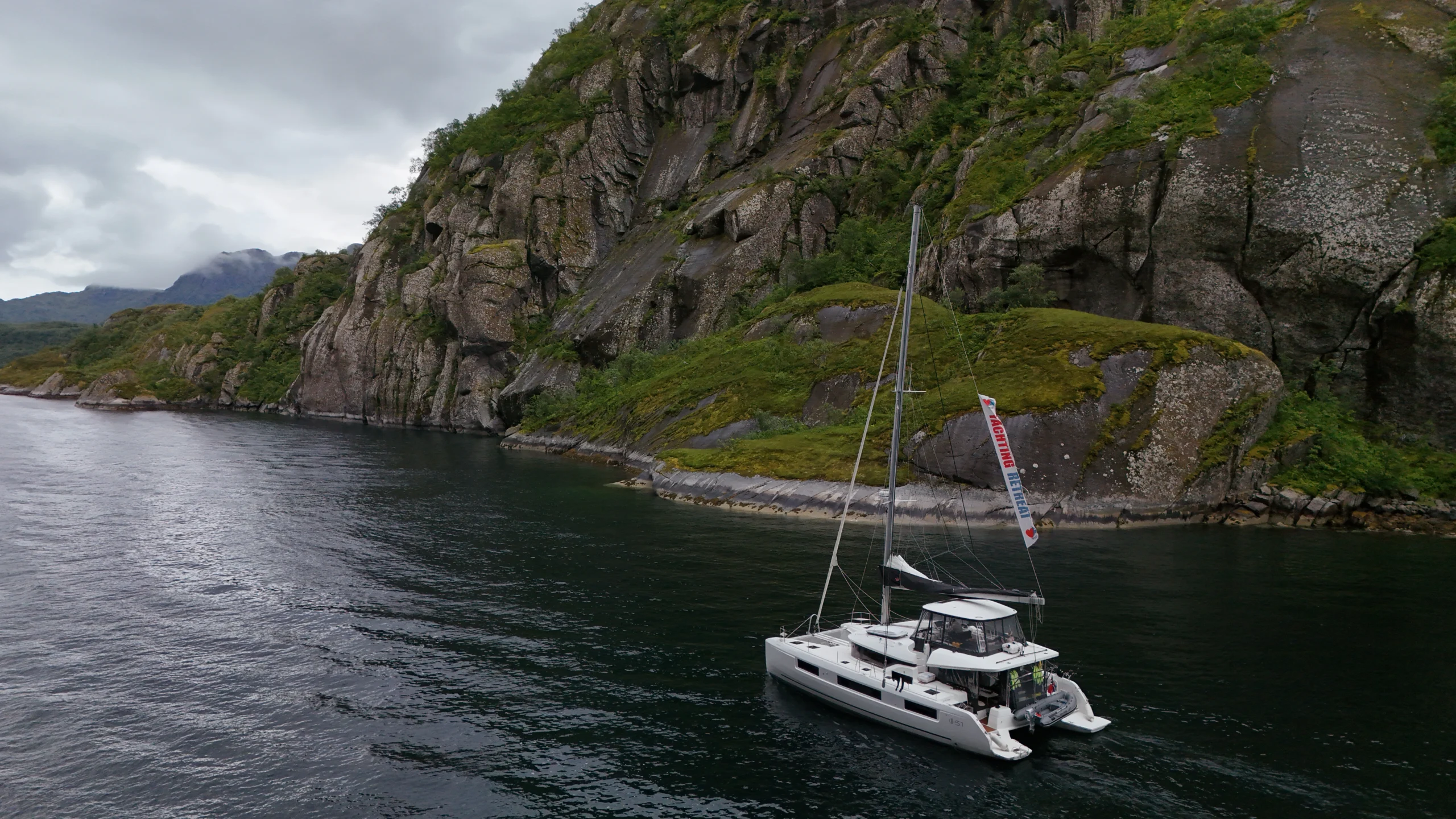
No. The boat is run by a licensed skipper, and you can learn the basics of handling it if you want to or simply enjoy the week — both are normal on Yachting Retreat trips.