Nærøyfjord vs Geirangerfjord: Which UNESCO Fjord Should You Visit?
Quick answer: Choose Geirangerfjord if you want dramatic waterfalls, mountain viewpoints, and a well-developed tourist infrastructure — it’s Norway’s most photographed fjord. Choose Nærøyfjord if you want a narrower, quieter, more intimate fjord experience with fewer crowds and calmer waters. If you only have time for one, Geirangerfjord edges ahead for scenery and accessibility; Nærøyfjord wins for atmosphere and tranquility.
Both are the only two fjords in Norway with UNESCO World Heritage status, listed together in 2005 as the “West Norwegian Fjords.” They sit about 120 km apart, and comparing them isn’t really about which is “better” — it’s about which experience matches your trip.
| Nærøyfjord | Geirangerfjord | |
|---|---|---|
| Length | 17 km | 15 km |
| Width | As narrow as 250 m (one of the narrowest navigable fjords in the world) | Wider, more open |
| UNESCO status | Listed 2005 | Listed 2005 |
| Main village | Gudvangen / Flåm | Geiranger |
| Signature sights | Sheer 1,700 m cliffs, goat farms, waterfalls | Seven Sisters, the Suitor, Bridal Veil waterfalls |
| Crowd level | Calmer, fewer settlements | Busiest in summer — up to 8,000 cruise visitors per day |
| Standard cruise price (2026) | NOK 550–625 one-way | From NOK 610 (75 min or 2-hour cruise) |
| Best known for | Narrow, intimate scenery; wildlife (seals, porpoises) | Grand, photogenic waterfalls and viewpoints |
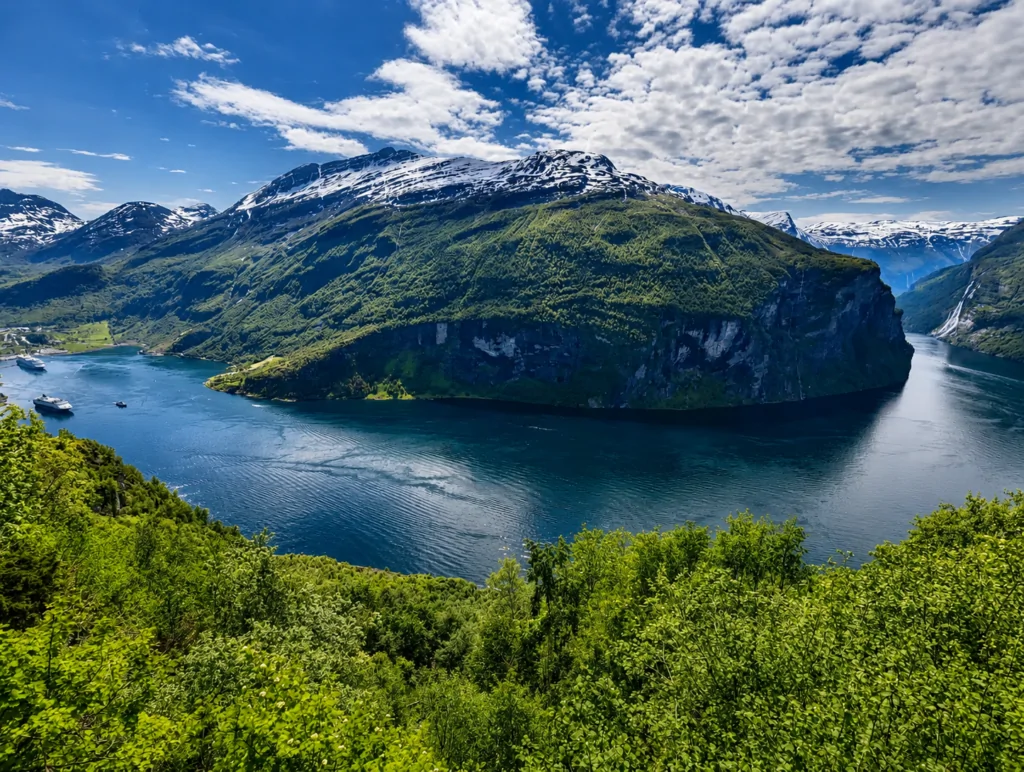
Geirangerfjord is the fjord you’ve probably already seen in photos — steep cliffs, waterfalls tumbling straight into the water, and cruise ships dwarfed by the scale of it all. The Seven Sisters, the Suitor, and the Bridal Veil waterfalls are the headline sights, and the fjord is framed by legendary viewpoints like Flydalsjuvet and the mountain road Ørnevegen (“the Eagle Road”), with its eleven hairpin bends.
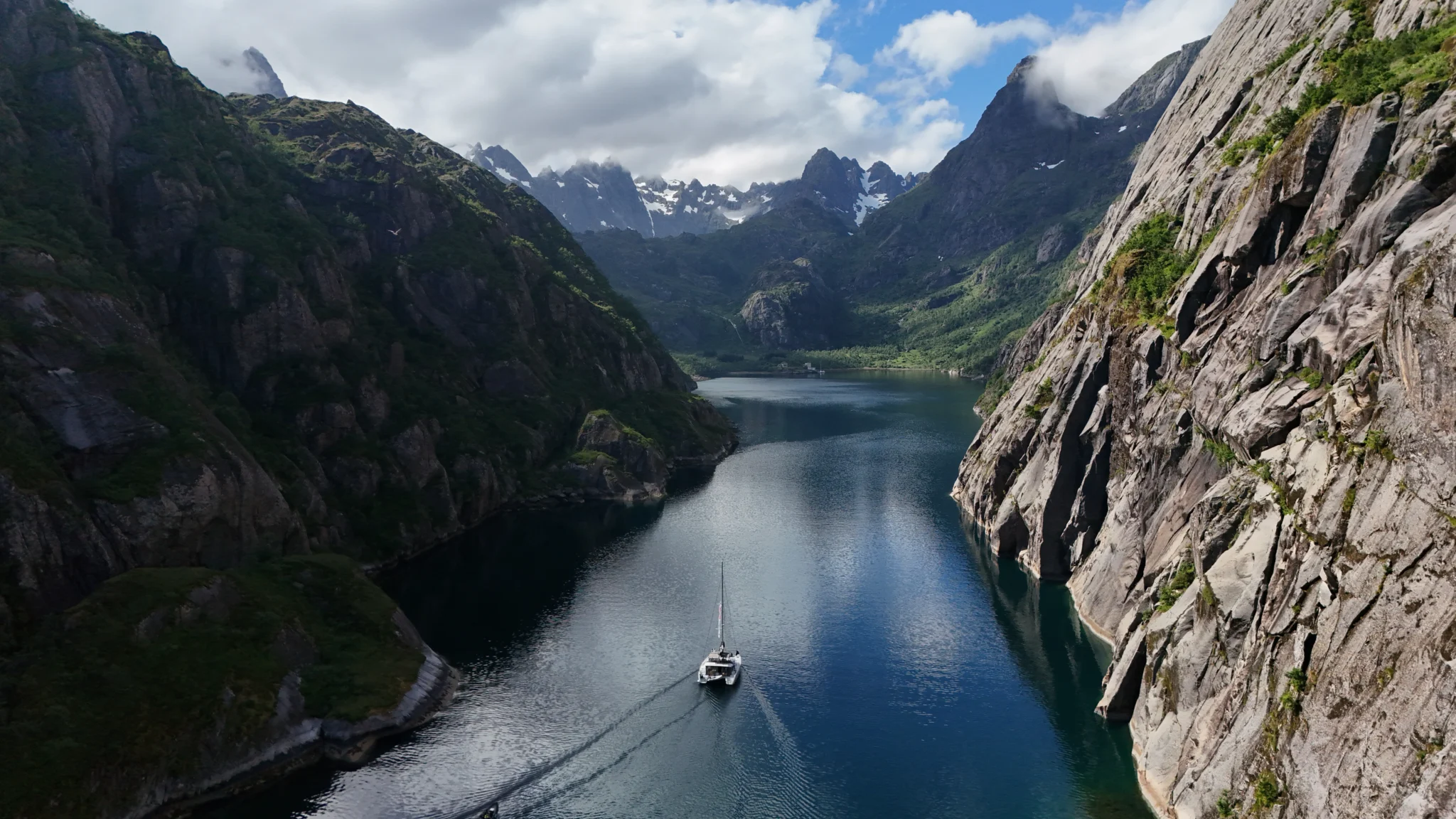
Nærøyfjord is a branch of the much larger Sognefjord, and it’s often described as one of the narrowest navigable fjords in the world — in places, it’s only a few hundred meters wide, with cliffs rising up to 1,700 m on either side. National Geographic once called it “the best unspoiled travel destination in the world,” and it has a genuinely different feel from Geirangerfjord: fewer settlements, calmer water, and a real chance of spotting seals or porpoises along the way.
If you only have time for one fjord, most travel writers and locals lean slightly toward Geirangerfjord for sheer visual drama — but the difference is genuinely marginal, and it comes down to what you’re looking for:
Can you visit both? Yes, but be realistic about logistics — the two fjords are roughly 120 km apart with no direct fast connection, so combining them usually means a long travel day involving Hurtigruten, a car, or multiple trains and buses. Most travelers with under a week in Norway choose one, not both — seeing “more of the same” scenery twice rarely justifies the extra travel time and cost.
Are Nærøyfjord and Geirangerfjord the only UNESCO fjords in Norway?
Yes. They were jointly inscribed on the UNESCO World Heritage List in 2005 as the “West Norwegian Fjords,” and remain the only two fjords in the country with that specific status.
Which fjord is easier to reach from Bergen?
Nærøyfjord is significantly closer and easier — it’s a core stop on the popular “Norway in a Nutshell” day trip from Bergen. Geirangerfjord requires a longer journey, typically via Ålesund or a multi-day drive.
Which fjord is better for photography?
Geirangerfjord, thanks to its dramatic waterfalls and iconic viewpoints like Flydalsjuvet and Dalsnibba. Nærøyfjord offers more intimate, narrow-canyon shots rather than sweeping panoramas.
Is either fjord good for spotting wildlife?
Nærøyfjord has the edge here — its sheltered, narrower waters are known for seals, porpoises, and abundant birdlife.
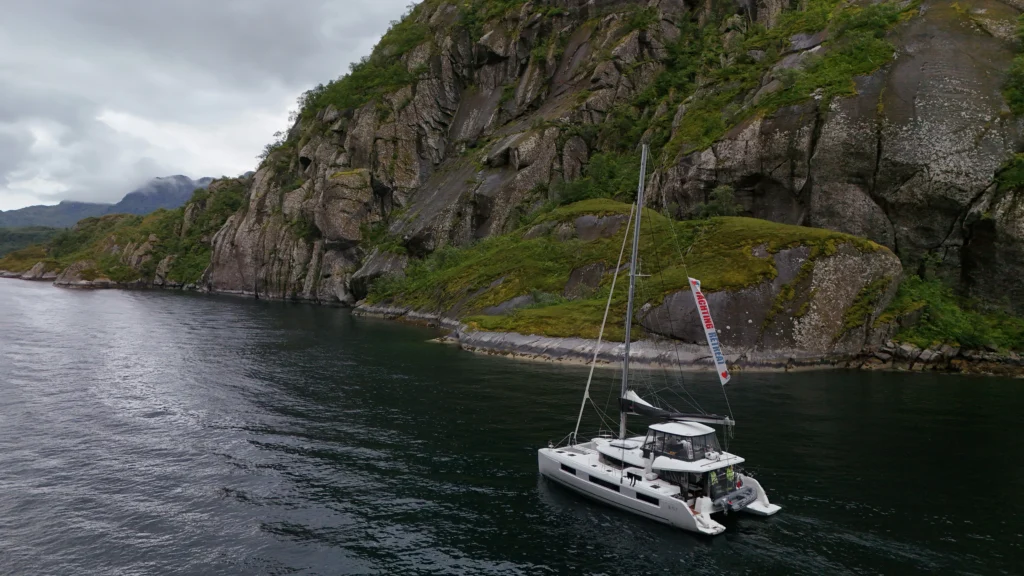
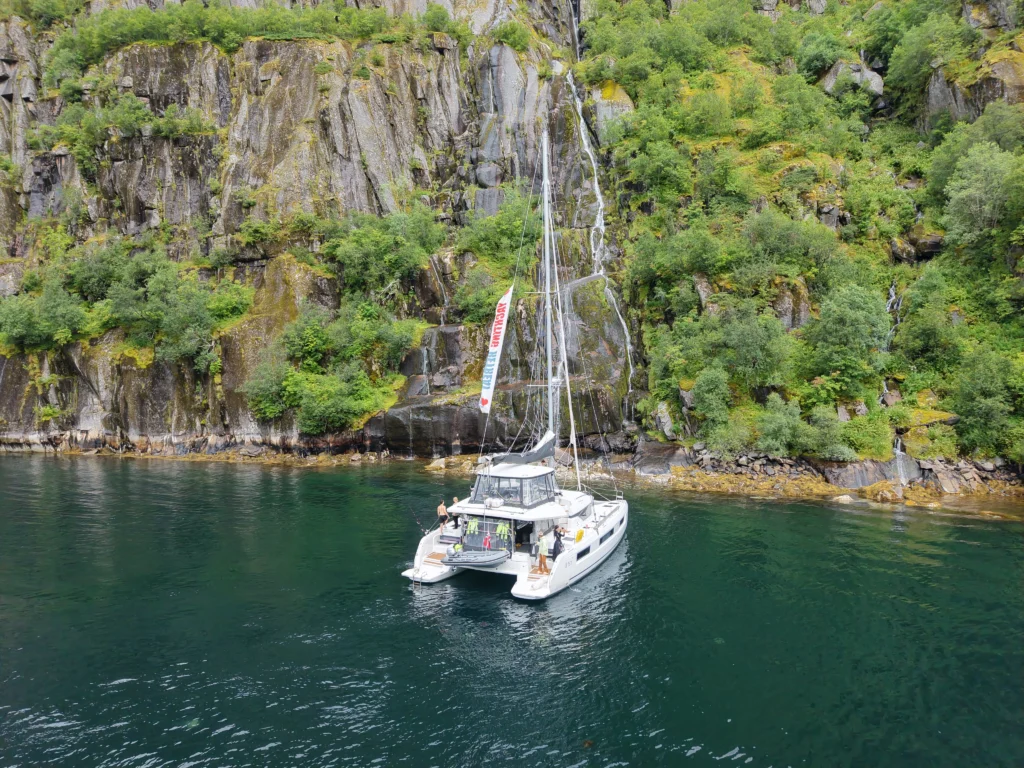
Both Nærøyfjord and Geirangerfjord give you a few hours on someone else’s timetable, surrounded by other passengers. Our Arctic Sailing Expedition in Lofoten offers something different — a full week aboard a private sailing catamaran through Norway’s wild Arctic fjords, with whale-watching, floating sauna stops, and nights anchored in bays most cruise passengers never see.